Thursday, June 9, 2016

If I Had A Buck... Summer Annuals!

Martinex1:   The calendar may not say Summer has started yet, but the kids are out of school and the neighborhood is filled with the sounds of basketballs bouncing, the squeals from trampolines and pools, the sing-song of ice cream truck tunes, and the bursts of firecrackers.

I have always enjoyed June and remember the childhood joy of waking up with no cares, wolfing down a bowl of Fruit Loops and slamming through the screen door to get outside for another day of whiffle ball, street hockey, eating snow cones, and firefly catching.   I clearly remember sticking my paper route money into the elastic of my knee-high tube socks and sprinting across the four-lane intersection to the corner drug store to look for the latest comics on the spinner rack.

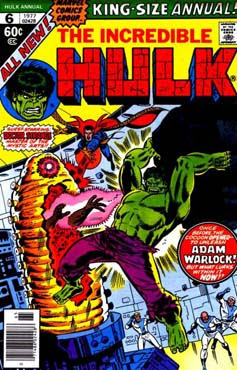
And it was around this time of year that the Annuals started appearing.   Not one, but TWO issues of The Avengers on the rack at the same time!  Big thick 50 cent editions of Iron Man, The Incredible Hulk, Spider-Man, and  Marvel Two-In-One were there also!  I quickly decided to skip the blue-raspberry Slushee, Marathon Bar, and Bottle Caps and get as many comics as I could.  

Annuals did not always contain the best scripted stories or the usual art team, but there was something magical about them.  The first annual I purchased with my own money was Amazing Spider-Man Annual #11.  It contained a rather pedestrian story about a trio of stuntmen hired to wear spider-like super-suits to take on our beloved Peter Parker.  It contained some of the first artwork of John Romita Jr. and to this day I still wait for those rather weak villains to make another appearance.  I must have read that issue thirty times that month.  It is strange how much I remember about that book from the venom tipped rapier to the scene with Mary Jane repeating her lines as a movie extra, "Peas and carrots.  Peas and carrots."

Another favorite of mine was Avengers Annual #9.  I picked that one up at a 7-11 in Colorado on a family vacation road trip on the way to the Grand Tetons.   The convenience store was adjacent to a KOA Campground where we stayed for a night, and my brother and I were out exploring.   This one had Don Newton art and the tale of Arsenal, a doomsday type robot, living in the sub-basements of Avengers Mansion.  I read that comic until the cover fell off.  I remember getting scolded by my Dad because I was reading in the back seat of the car instead of enjoying the majestic mountain scenery of the American west.  Decades later I replaced that issue with a much less worn copy from Doug's ebay offerings.  Others may say that the best Avengers Annual was #7 with the Thanos showdown or #10 with the Michael Golden art, but this one is all about nostalgia for me so it remains my favorite.


So here we are together yet again for another $1.00 Challenge.   Spend your money wisely as you choose just two issues this time (hey, they are double-sized after all) from the long list of selections below.  Whether you want 64 pages of humor or heroes, let us know what drove your decisions.  From Atlantis Attacks to Archie, what were your Summer Annual and seasonal memories?   Which year presented the best set of annuals?   And what were your all-time favorites?


Wednesday, June 8, 2016

Star Trek at 50: Shore Leave


Season 1
Episode 17: Shore Leave
Filmed: October 1966 
First Air Date: December 29, 1966

Karen: One of the more fanciful episodes of original Trek, 'Shore Leave' makes an impression. Our crew is bewildered by encounters that simply cannot be occurring, but are. Some of these are funny, some are melancholic, and some are outright lethal. Even our good Captain finds himself overcome by the phantoms of his past. The pace is quick and there's never a dull moment. The episode is greatly enhanced by being shot on location -something that would become a rarity in later seasons.


Karen: Surprisingly, it takes quite some time before the Enterprise crew begins to understand the nature of the planet  and what's going on around them. Kirk still can't resist giving his old adversary Finnegan a good beating, even though he knows it's not really him.  Well, after he had already gotten the tar knocked out of him earlier, I guess Kirk had earned it.


Karen: Kirk also encounters Ruth, an old flame. Shatner portrays this well, with mixed emotions: confusion, longing, regret...you can tell that whoever Ruth was, she was no one night stand. The music by composer Gerald Fried in these scenes also highlights these feelings. My one complaint is that I always thought Ruth (played by actress Shirley Bonne) looked a bit too old for the presumably Academy-aged Kirk. But then again, Kirk never seemed to discriminate. 

Karen: In the book Star Trek Memories, Shatner recounts how filming this episode was a bit tricky. NBC had wanted major revisions done to the story by science fiction author Theodore Sturgeon, so Gene Roddenberry, who was about to go on a vacation to Hawaii, left behind notes for Gene Coon. For some reason, Coon never received the notes. So Roddenberry went off on his vacation, and when he returned, the crew was ready to film "Shore Leave" the next day -without any of the changes NBC requested! Roddenberry rewrote the script on location (both Africa USA and Vasquez Rocks were utilized). However, Shatner notes that Roddenberry couldn't finish everything, and there was quite a bit of ad-libbing by the actors in this episode. Roddenberry and the actors were  coming up with all sorts of ideas to fill out the story. One that didn't make it into the finished episode: Captain Kirk wrestling a tiger. There is a tiger seen in the show, and Shatner at one point thought it would be a terrific idea for Kirk to wrestle the big cat. Shatner, always enthusiastic, was a little too pumped up that day, as he explains:

"Now the words 'stuntman' and 'phony tiger' are probably already buzzing about your cerebellum, but I can assure you that strangely enough, I wasn't the least bit interested in such precautions. Even stranger, I can remember being really excited about the whole thing. I mean, here I was, this middle-aged actor, caught up in the adrenaline of the moment, and I stood there, like a dope, actually contemplating hopping on top of Shere Khan. Roddenberry, who had about a hundred thousand other things to worry about, came over and tried to talk me out of this unarguably stupid idea, but I was, for some reason, determined to go through with it.

"Then Roddenberry did something brilliant. With his arm around my shoulder, we strolled through the park as he tried to convince me I was far too important to the show to risk wrestling some man-eater. He really wasn't getting far, but then, and in retrospect I'm sure it was premeditated, we 'stumbled' upon the tigers' habitat at precisely feeding time. There sat the tiger I would be battling, enormous, majestic,  and gnawing away at a bone full of red meat.

"Immediately my testicles rose up into my Adam's apple, and the ignorant machismo that had been pulsing so heartily through my veins was now replaced by sheer abject terror. I stood there trying not to look too horrified as I now gracefully backed down, 'for the good of the show.'"

Karen: Despite not getting to see Kirk battle a tiger, this is an exciting, action-packed episode. The knock-down, drag-out fight with Finnegan is a heck of a brawl. This episode also sees Dr. McCoy killed - not almost killed, but d-e-a-d, dead. The advanced technology of the planet is used to bring him back to life, as if nothing had happened. Trek seems at times to treat death lightly. Scotty was also killed in "The Changeling" and brought back to life with no adverse reactions. I think there may have been a few other deaths and resurrections, I just can't think of them at the moment. You can make the argument (as some people have) that every time someone steps into the transporter, they actually die and are reconstructed -a copy of the original person. So I wonder where the concept of the soul or the afterlife comes in to Trek? Is a person just a machine you can restart? Is there no element to us greater than our biochemistry? The fact that Star Trek makes me think about things like this makes me love it even more. 

Karen: All in all this is a very enjoyable, if atypical, episode of Trek.


Tuesday, June 7, 2016

Face-Off -- Handbook Aesthetics


Doug: Friends, fans, and those of you who are foes... I've been meaning to get back to the Handbooks, because our first two ventures seemed to go over well (the Thing, and the Avengers), but alas "time won't let me". So instead of focusing on one entry, how about if we just love (or hate) on the styles of the covers of these wonderful comic books? Below are three samples -- what's good and/or bad?


Monday, June 6, 2016

Buried Treasures: Smash's "Fantastic Foes"


Doug: Karen has had so much fun showing some of the treasures hidden deep within her collection of comics and memorabilia, I thought I'd get in on the act. I'll be back next Monday with our regularly scheduled comic book review. But perhaps for you, and I know for me, this should be a fun respite.

"Back in the day", as they say, I attended elementary school at South 78th St. School in Milwaukee. I was there for my 2nd-4th grade years. But it was during my final year there that the gems below landed in my hot little hands, courtesy of the folks who published Smash magazine. As I recall, each month there would be a 3-page spread spotlighting some denizens of the Marvel Universe. To rabid young Doug, this was gold. And, in several cases it was my introduction to the seminal years of Marvel Comics.

To the best that my wife and I can recollect from our childhoods, Smash and it's competition mag Dynamite (we'll check that out in a later installment) were available as part of a monthly book order from Scholastic and maybe another company whose name neither of us can remember. For ridiculously low prices, such as $1 or even less for a paperback book (Sharks: Attacks on Man scared the heck out of me in the summer of Jaws...), students could place orders and have a veritable care package dispensed within a couple of weeks. It was like Christmas, but throughout the school year.

So once I found out that Smash contained these comic book features I was hooked -- or, as hooked as I could be when Mom approved the orders. At some point, maybe during a family move or some such thing, I cut the comics-related pages from the magazine and discarded the rest. Consequently, I have very little to offer in regard to the other contents of a given issue, or even which issues contained the material depicted below. In fact, searching the Internet for information on Smash yields little. However, you can make the jump to Al Bigley's blog, where he has published posts similar to today's. Later, much later, as I was creating data pages for my comic collection (indexed, updated prices, separated by dividers, stored in a 2" binder) I decided to 3-hole punch the pages I'd saved from Smash and Dynamite and insert them within the corresponding sections of my notebook.

An annual rite of summer in our home is the garage sale. Just days after finishing the spring semester I was down in the comic room cleaning out the closet. Those of you who've been with us for some time know that I've sold off all of my comics and quite a few other items. When I opened the box that contained my collection binder I was of course swept with a wave of sentimentality. But I was also very pleasantly surprised to again see the pages we've been discussing. So although the binder went in the trash and its pages in the recycling bin, these gems were preserved for your perusal and amusement. Today I'm featuring the origin of Doc Ock and a Dr. Doom/Thing tussle. I'll leave it to you to provide the source information. Be prepared to be overwhelmed with some serious Silver and Bronze Age artistic majesty from the likes of Ditko, Romita, Andru, Kirby, Sinnott, and Buscema. What a visual tour de force!


Saturday, June 4, 2016

Discuss: Giveaway and Promotional Comics

Redartz: Today, let's look at a little sidebar of our hobby, promotional and giveaway comics. After all, if there's anything better than comics, it's gotta be free comics!

The history of promotional comics is a long one; some historical examples include Little Orphan Annie's Popped Wheat giveaways, Motion Picture Funnies Weekly  (with the first appearance of Sub-Mariner, a movie theater giveaway) and "Donald Duck's Atom Bomb" (a scarce Carl Barks story, given away by Cheerios). Many continue to be produced up to the present; "Free Comic Book Day" provides many freebies each year at brick-and-mortar comic shops everywhere. Many of the current films and DVD releases feature promotional comics as enticements. 

Personally, I have found promo comics to be a lot of fun; often being produced in odd sizes and formats makes them unique and attractive. Here's a few of my favorites, with thanks to the Grand Comic Book Database for some of the images.

 
I got one of these as a kid with a bag of chips. Still recall asking my Mom for that particular brand, just for the comic...

Fairmont Potato Chips Giveaway, 1970


Cartoon Network Comic given with VHS Tapes, 1996
On the left: This little gem adapted a great episode from the cartoon series. It was given away with the VHS tape of another episode...
On the right:
Planned Parenthood giveaway, 1976
Spider-Man and sex education; not a combination one would generally expect...


Adventures of the Big Boy 92, c. 1964
On the left: No doubt many of us have picked up one of these at some time; usually with food and drink stains...
March of Comics 293, 1966
On the right: Or maybe taken one of these home with a pair of new shoes...


How about you?  Share your comments and memories of these humble yet appealing freebies, while I go pursue that elusive Pop-Tarts Batman mini from 1966...


Free Comic Book Day giveaway, 2008

Aim Toothpaste giveaway, 1980


Pizza Hut giveaway, 1978
Chicago Tribune giveaway, 1980

Thursday, June 2, 2016

A Simple Question Regarding Longevity of Bands

Martinex1:  Is a band's work considered more favorably if the group breaks up or if they stay together for a significant amount of time?


Wednesday, June 1, 2016

Star Trek at 50: Where No Man Ever Went


Karen: As we have reached the mid-point of the first season, I thought it might be interesting to discuss some of the story ideas that didn't make it into episodes in this first season (or maybe ever). Many thanks to Marc Cushman and his excellent book, These are the Voyages, Vol. 1 (if you haven't bought it yet, what are you waiting for?), wherein he discusses many of these failed concepts.

Karen: Stories were rejected at various stages of development, and for many reasons. Writing for a show as novel as Star Trek was not an easy task. Writers familiar with science fiction often came up with concepts too big (and expensive) for the TV screen. Those writers used to handling Westerns or police dramas just couldn't wrap their heads easily around the futuristic concepts of the show. So it was not unusual for stories to require a lot of hands-on from the staff. Sometimes they could be salvaged, but other times they had to be let go entirely.

Karen: In the first season, there were more than a dozen such stories which were either completely discarded, or reworked and produced in later seasons. Often considerable effort went into developing these stories, only to have Roddenberry or Coon come to the conclusion that it simply wasn't working. But perhaps a bit of an idea might be salvaged to be used elsewhere.

Karen: From the first season, prominent scrapped shows include Roddenberry's own "Omega Glory" which he had pushed again and again, and no one but he truly seemed enthused with it. It would eventually get produced in the second season, but grudgingly.

Karen: Science fiction writer A.E. van Vogt came up with an idea called "The Machine that Went Too Far," but apparently his idea went too far, and this story about an android who tries to take over the ship was reworked but rejected, although the second season episode "I, Mudd" had some similarities.

From "Elaan of Troyius"
Karen: Likewise, "The Galatea Syndrome" by Alfred Brenner involved the Enterprise transporting a hostile planet's leader to peace talks with another planet, and the leader's mistress used an aphrodisiac to wreak havoc on board. Although this treatment was disliked by Bob Justman and others, and rejected, elements of it can be seen in the third season episode "Elaan of Troyius."

Karen:  "Rites of Fertility" by Robert Sheckley, another SF writer, had the Enterprise crew turning into plant people. This one was rejected for a variety of reasons, including expense. 

Karen: One of the most intriguing, and perhaps infamous rejected stories, is "Portrait in Black and White." Fans have heard tales about this one at conventions and through other means for years. In his book, Cushman gives a detailed rundown of how this idea came to be. My short version: Roddenberry came up with an idea about a parallel world resembling the pre-Civil War era South, with the twist being that Blacks were the ruling class and Whites were enslaved. He handed this off to writer Barry Trivers to flesh out. Associate Producer Bob Justman was very uncomfortable with the whole thing, which included breeding camps, and he felt they had to send it over to NBC before they got too far along with the project. NBC flat-out rejected it, despite Roddenberry's protestations, and it died...but by the third season, a different story would use a blatant make-up technique to address racial hatred in "Let That Be Your Last Battlefield."

Karen: George Clayton Johnson, writer on the episode "The Man Trap" and numerous episodes of
George Clayton Johnson
The Twilight Zone, as well s the film Logan's Run years later, received an assignment to develop one of Roddenberry's ideas, titled "Chicago II," but it went nowhere. Johnson submitted his own idea, "Rock-a-Bye Baby, and Die," which involved the Enterprise becoming 'impregnated' with a newborn soul. As the being becomes aware of itself, it wreaks havoc on the ship. Gene Coon felt the story was too out there, and he and Johnson couldn't see eye to eye. Johnson went to Roddenberry for help and Roddenberry essentially said Coon, his producer, had final say. Feeling Roddenberry had taken the easy way out, and just generally annoyed by the whole situation, Johnson withdrew his story. It was the end of his affiliation with Star Trek.


Karen: One of the stories I find the strangest was titled "The Squaw," and was pitched by Simon Wincelberg, who had worked on "Dagger of the Mind." Essentially it is a cowboys vs. Indians story, where the Indians on the planet are primitive Vulcans, and the cowboys are human survivors of a spaceship crash. Spock winds up with the 'Indians' and one of them, a woman named Missie, becomes smitten with him. No, I am not making this up. This actually got through two drafts, but bad blood between Wincelberg and Roddenberry over the rewrites of "Dagger of the Mind" put a stop to any chance of our seeing Kirk and Spock riding horse -although come to think of it, we'd see them with six-shooters in "Spectre of the Gun" and they would encounter Native Americans in "The Paradise Syndrome."

Karen: There were many more lost episodes but I think this is enough for now (the second season had some even more interesting ones!). One thing is for sure: no concept was ever wasted! Even if a story never made it into production, some concept could surely be taken and reworked for another episode.


Related Posts with Thumbnails