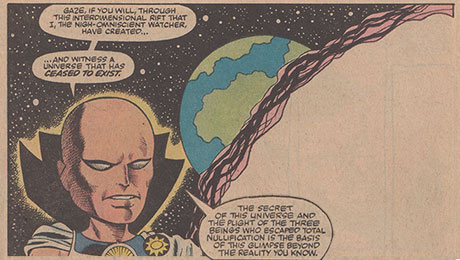
Captain America #176 (August 1974)(cover by John Romita)
"Captain America Must Die!"
Script: Steve Englehart
Art: Sal Buscema and Vince Colletta
 Karen: After the terrible reveal of last issue, Cap is at a crossroads. He stands on the rooftop of Avengers' mansion, brooding. How can he go on being Captain America, wearing his uniform, representing his country, when he's just seen so much corruption at its heart? We get a flashback to Cap's origin, and I think this is one of the better re-tellings of his story. There are interesting little details here - were we told before that Steve was born and raised in Manhattan? We see him in a movie theater, watching news reels and getting righteously angry over the atrocities the Nazis were committing in Europe. All of this would get incorporated into the Captain America film too. We see him volunteer for the super-soldier experiment and become transformed, and then have the genius behind it, Professor Reinstein, get murdered by a spy. This is all achieved in 4 pages, and culminates with Cap thinking that he had truly become the embodiment of America -but things had changed drastically since then.
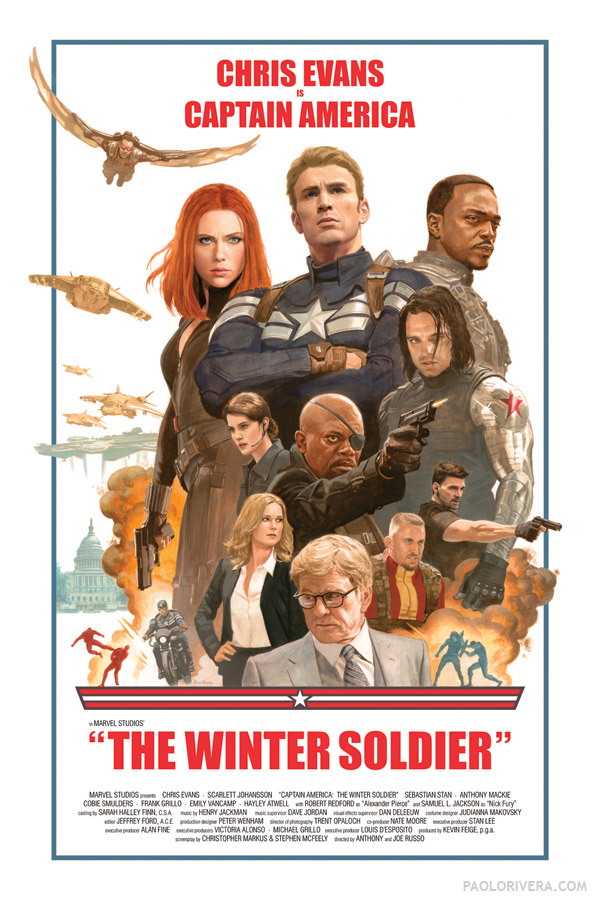
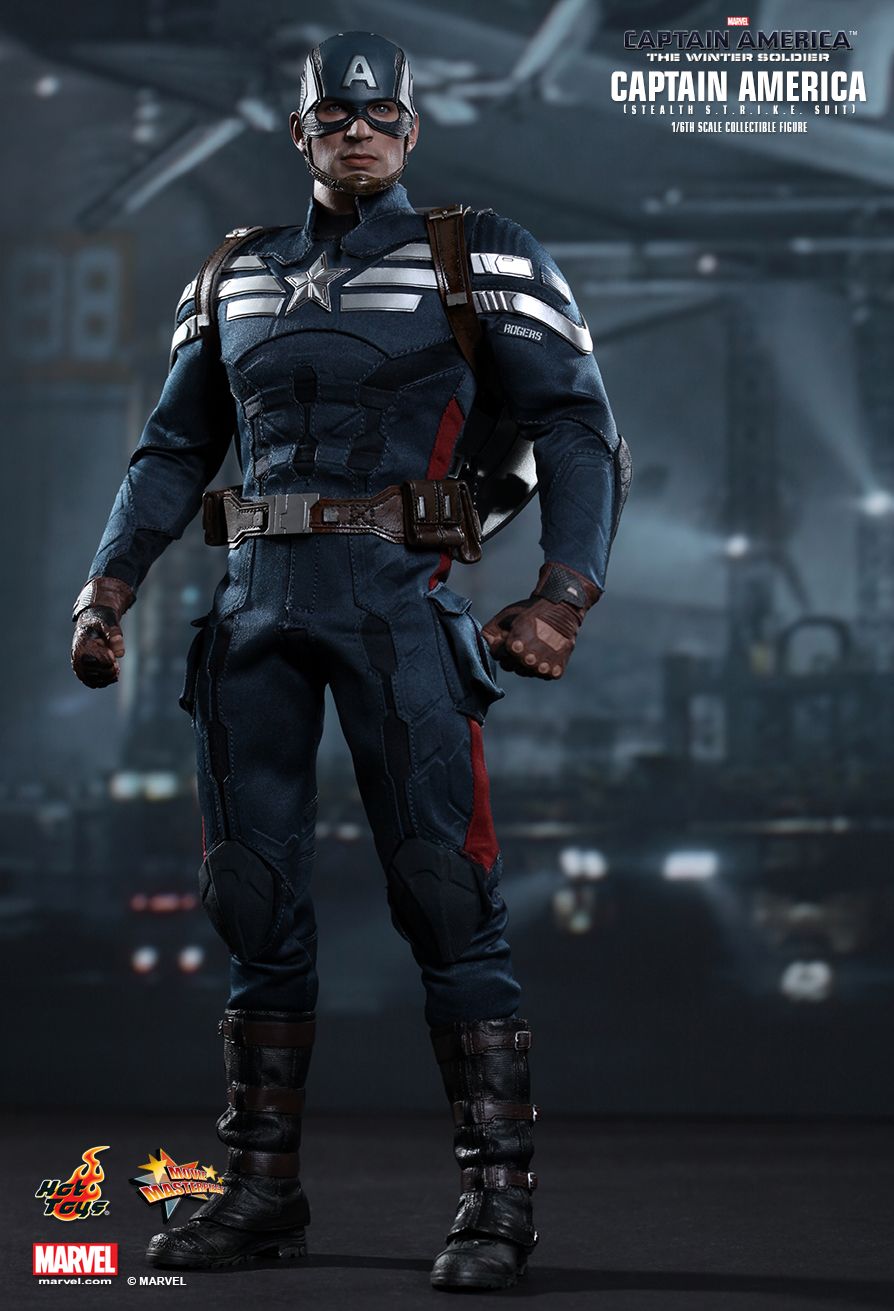
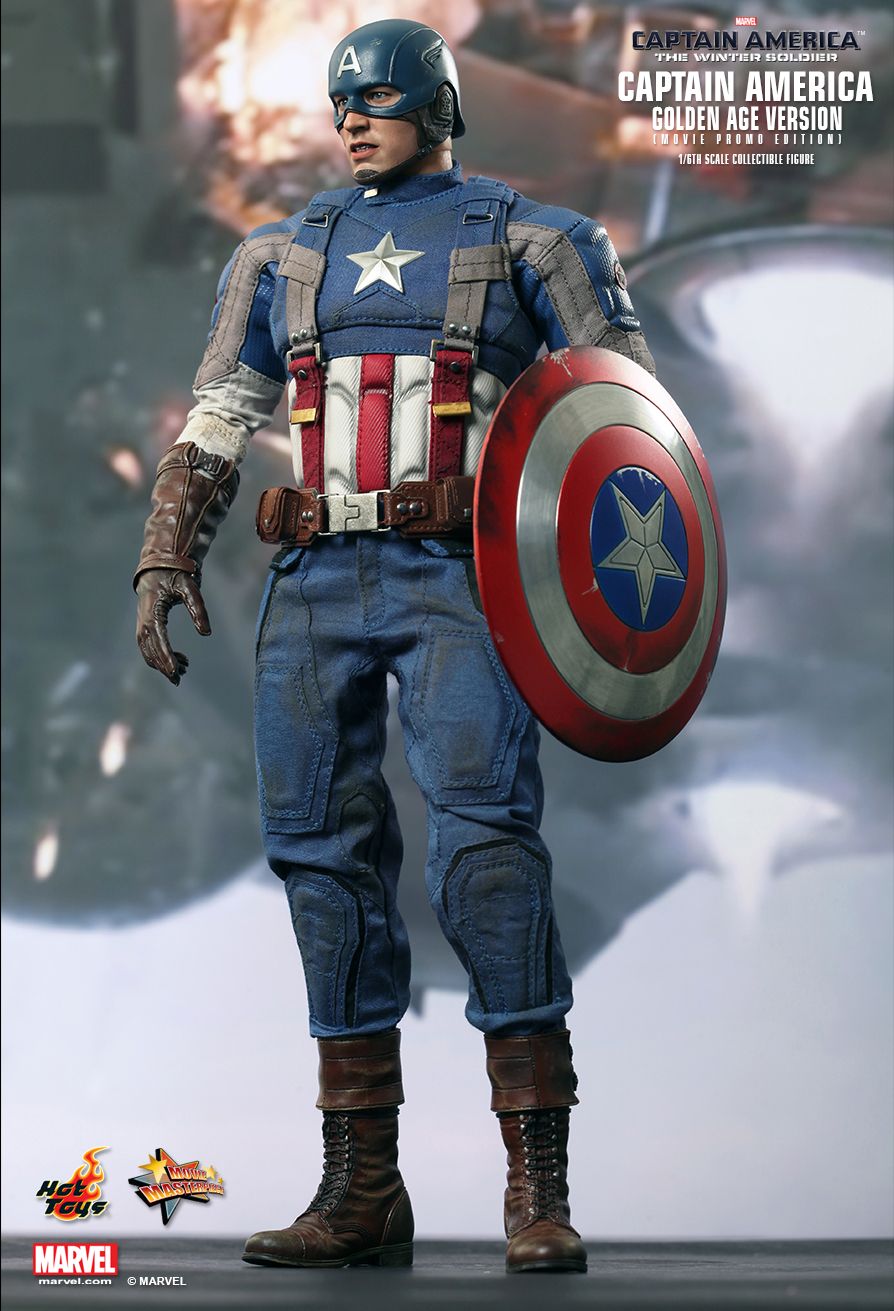
Doug: My question is, how did they get Chris Evans's head on that scrawny little body? But really -- if Steve Englehart claims to have written all the stories that would become the first Batman franchise, then he could certainly lay claim to the origin of Captain America. Except that Jack Kirby had done it a couple of times earlier. Anyway, you can sure see the influence of these panels in the Super Soldier portion of the first Cap film. Bone to pick, though -- wasn't the original doctor named Erskine? This fella's name is Reinstein, as you said. I wonder when and why that was changed. I thought Vinnie Colletta's feathery line was really conspicuous in this sequence, with Rogers bare-chested. And given our review of the second part of "Whatever Happened to the Man of Tomorrow?" and Superman's decision to end his career after the death of Mr. Mxzyptlk, it was ironic that Rogers felt sorry but not sorry about pummeling the Nazi spy into the control panel where he was electrocuted.

Karen: His thoughts are interrupted by the appearance of Thor, his long-time team-mate. Let me take a moment to say that Sal and Vinnie do a great job on the God of Thunder in his brief appearance. As one might expect, Thor counsels the Captain that he is a fighting man, and it is in combat that he is at his finest, and most noble. Cap says he's not even sure what 'nobility' is any more. He's even still beating himself up for stealing that electron-gyro a few issues back. Sure, he did it to help clear his name, and he stopped the Secret Empire, but it bothers him that he stooped to do it. The Thunder God says that whatever Cap decides, he'll have his friendship, and he launches himself into a storm-tossed sky.
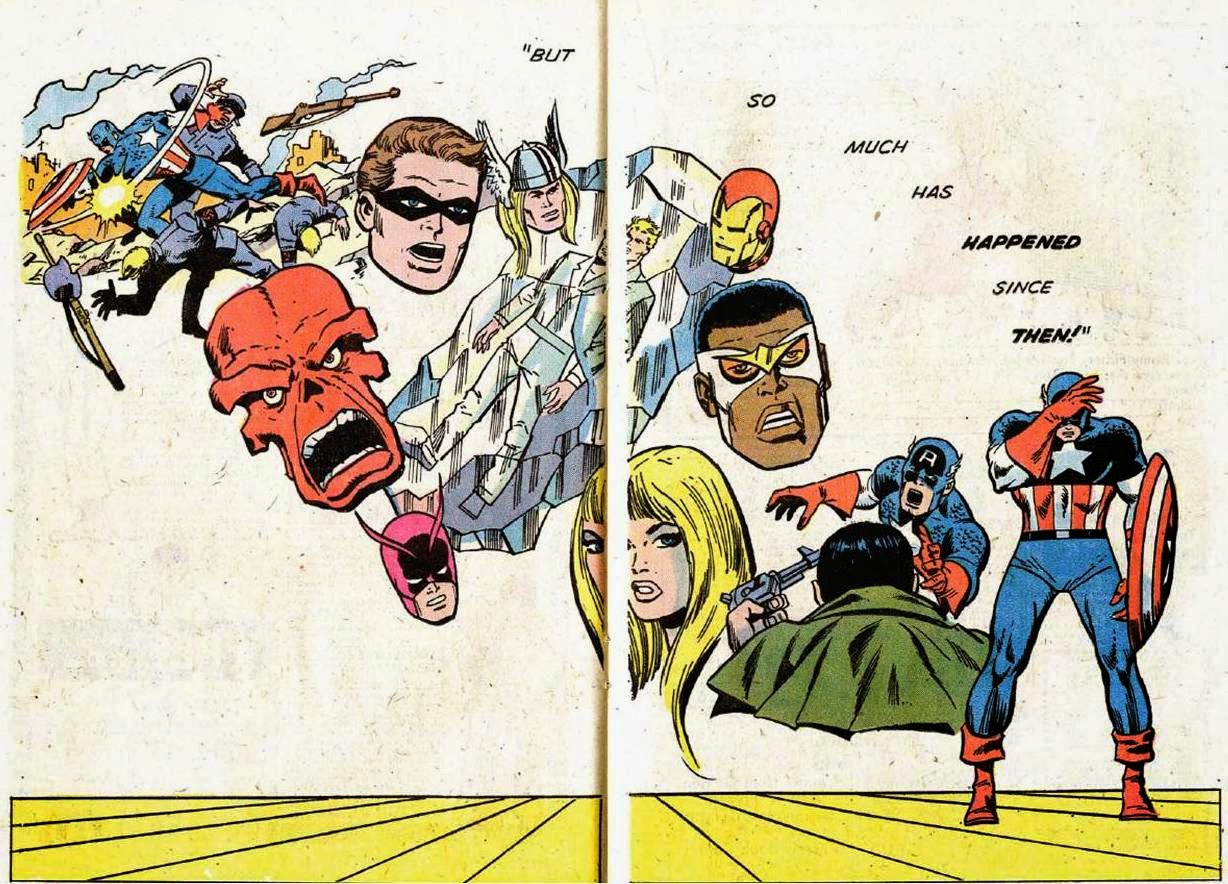

Karen: I've always thought that these two have similar codes of honor that help to unite them. Cap re-enters the mansion and runs right into another old friend -Iron Man. This is the Shellhead with the nose, so it always looks weird to me. Iron Man takes another tack with Cap -namely, that their powers obligate them to help others. He reminds Cap of different times he's saved lives - or even how he's always agreed to perform at charity events. The star-spangled Avenger bitterly responds that people turned on him the first chance they got when Harderman and CRAP (one more chance to use that acronym!) started spreading lies about him. People took all his help for granted. Shellhead says, so what? Doing good deeds can still give his life meaning, regardless of how fickle the public can be. Just then, Cap's partner, the Falcon, bursts in.
Doug: Iron Man had the nose when I came to "new" Avengers comics, so it's never been odd to me. I actually like it for two reasons: it dates the character to my earliest comics memories, and it sure seems more practical than the flat faceplate! Cap sort of gets an "It's a Wonderful Life" lesson from Iron Man, and I think it's effective. The Avengers are sure giving him the hard sell. How disheartening must it have been for Thor and IM to see Captain America, the mainstay of the team, so downtrodden. But to your comment about Cap's anger at how the crowds so quickly turned on him -- that's a Stan Lee trope as old as the Marvel Universe. Personally, I get very tired of it, but I'll give Englehart credit for taking it and crafting a pretty darned good tale because of it.

Karen: It's funny when you think about the cycles Cap went through: he was pretty miserable when he first got out of the ice, then seemed to settle in to his existence, and then whammo, this situation comes along. Falcon gives Cap some tough love, angry that his partner had just split from Washington without a word. He brought along Sharon Carter and her older sister Peggy (although Peggy was confused as to why Falcon looked for Cap at Sharon's place... oh dear...). Cap says something happened at the White House, something he can't talk about. Falcon replies that the officials have clamped down on that too. But he's shaken by the change he sees in Cap. Cap has always been rock-steady. He briefly recounts his first meeting with the Avenger and how Cap trained him and made him into "the man I always wanted to be," the Falcon. When the two of them became partners, Falcon felt like he was becoming part of a legend. Falcon says that as heroes, they are examples to others -they can lead others. Cap more so than anyone else. But Cap is not so sure. He says that the people in charge of the country were also supposed to be heroes, people that the citizenry could look up to -and they were criminals. But the Falcon says that's all the more reason for Cap to hang in there -the people need him now more than ever! You really feel Falcon's passion here as he tries to reason with Cap.


Karen: Peggy picks up the plea, as she comes from a different viewpoint. She says politicians come and go, but America is still the greatest country in the world. After everything the country was going through at this point, it seems a bit tough to swallow, but it was a viewpoint held by many at that time (and today). She says that Cap is the living symbol of freedom. She reminds him that he just recently fought a 'fake' Captain America (the 1950s Cap who was psychotic -hopefully we'll review those issues one of these days) who did not represent his views of America -is he ready to give up on America so quickly now? He's not just any super-hero -he's Captain America!
Doug: Peggy's soliloquy might be the best of the lot. She really put Cap on a pedestal he so richly deserved. However, at the bottom of the final page of her pep talk, Sal and Vinnie give us an image that made me feel like I was riding "It's a Small World" at Disney World! Native costumes, indeed!
Karen: Cap takes it all in, but then calmly replies that America has changed a lot since he took on his name. Americans have many different ideas and creeds -they are far more divided now. When people look at him, what does he represent? After saying that, Cap asks to be left alone. His friends all walk out, but then he hears an unearthly voice. He turns and sees his Avengers' team-mate, the Vision, materialize through the wall. The synthozoid simply asks him if he can give up a life of adventure, and then leaves him alone with Sharon Carter. She asks him no questions, just tells him that whatever he decides, she's with him, the man under the mask, and gives him a kiss and leaves.

Karen: Finally alone, Cap stops to consider what was said. He had hoped someone would present him with a viewpoint he hadn't thought of -but they didn't. He thinks to himself that they all missed the main point: he was created by the government to protect the country. He did his best, and although he was not always proud of everything he did, he served as well as he could. Now though, he finds that the government has been serving itself. "I just don't understand! I just don't understand!" Cap thinks in anguish. Clearly his whole world has come crashing down around him. This is the hardest decision of his life. He opens the door and faces his friends, and tells them, "I've asked myself if Captain America must die, and if I had the courage to carry out my verdict. The answer to both questions - is yes."
 Doug: When you first read this, did you think he would relent and stay on as Captain America? Even though I knew what was going to happen, I still hoped that Steve Rogers would rethink it -- after all, he is Captain America. Hmph... is this another case in our discussion of who is real -- the hero or the secret ID? Is Captain America Steve Rogers, or is Steve Rogers Captain America? But what Englehart chose to explore here is very interesting. From time to time we've all been disillusioned by our government in total, or at least in governmental policies. But when one's entire identity is wrapped in the flag -- literally -- and when one is the living embodiment of the red, white, and blue... well...
 Karen: I recall at the time it was pretty shocking! And it seemed like it took forever for him to put the red, white, and blue back on, even though I believe it was only 8 issues. But this was the first time I saw a hero call it quits, and trying to understand why he did it was important. I knew things were not right in our country but I didn't quite know why. Cap was one more clue.
Karen: This is the pay-off of the whole series of issues we've reviewed, and I think it's a terrific one. At some point, I want us to go and review the follow up, with Steve Rogers dealing with life without Captain America, because I think it's actually more interesting than the "Secret Empire" story! But we'll save that for a later date. It's not easy to see a living legend thrown into such a state of utter disillusionment and confusion -"I just don't understand!" - but it was a great mirror to what much of the country was going through at the time. Despite all the different reasons given for Steve to remain Cap (and using the Avengers and Cap's friends was a terrific method), Steve must be true to his convictions, and they tell him that he can't wear the colors of a country he no longer feels confident representing. It was a bold story then, and I think it still is now.






.jpg)