Nova #2 (October 1976)
"First Night of the Condor!"
Marv Wolfman-John Buscema/Joe Sinnott
Doug: I was in on
The Man Called Nova from the first issue. What a great
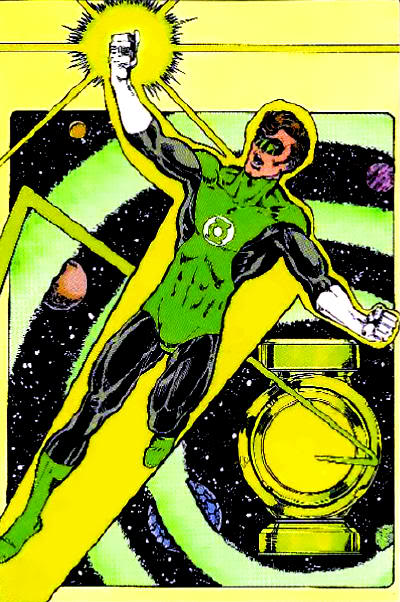
inaugural cover, and this one's certainly no slouch, either. Yeah, it might be busied-up a bit, but a new hero and two new baddies... and some Kirby Krackle? Take the money right out of my 10-year old paw, please! I chose to review this issue rather than the first because I felt that most of you have either a) read that ish or b) at least know that if someone put the origin stories of Green Lantern and Spider-Man into a blender and mixed them up, you'd get Nova. So the second issue seemed like it might be more interesting for a revisiting.

And honestly, I've not read this since I bought it almost 40 years ago. But this time 'round I'm reading and scanning from the
Nova Classic tpb.
Doug: We open at a bank robbery in progress. Who draws thugs better the Big John Buscema? I say to thee -- no one! Nova blasts through the huge plate glass window and makes very short work of the goons, using his "Nova speed" to weave in between the bullets until he can pummel each and every one of them. But young Richard Rider, the teen beneath the helmet, is a bit miffed that all the bank manager can worry about seems to be who will replace the now-broken window! Welcome to a riff frequently played by Spider-Man, friend. And maybe as we get off and running this morning we can discuss why this series was short-lived (25 issues of its own, and then continuing into the pages of the Fantastic Four for the tying up of loose ends). As I said a minute ago, that it obviously rips off (yep) GL and Spidey probably didn't help. While that's a proven formula for success, fans are onto that sort of "borrowing" right away. The writers and artists had better do something nifty right away to gain some separation -- and I'm not sure Nova creator Marv Wolfman did that.

Great super-suit, however. The Nova costume has always been one of my favorites. So why wasn't this mag must-read? Let's continue.
Doug: As Nova arrives home on Long Island, he swoops in his bedroom window undetected (see?) and then recaps his origin from the previous issue. He's full of self-doubt (see?), unsure of what his full power-set is and the backstory of the centurion who'd gifted him his powers. But as he'd been in flight home, we the readers were introduced to an African-American gentleman calling himself the Condor. He spoke in mysterious tones, and flew off to meet his partner. We watch him arrive to a rather mountainous region on Long Island. As he flies into his hideout, he muses to himself how soon his plans will be in place and he'll be some crime overlord. But then he wonders about another referred to only as "him" or "he" (the oldest "mysterious" writing trick in the book), and how "he'll" not like his territory being compromised. But there's a partner to the Condor -- who is not where he's supposed to be. Quickly flying back out of the cave, the Condor finds a young man on a cliff, deep in his own thoughts. The Condor, angry, swoops low and knocks the youngster off his feet. But as his partner falls and begs for rescue, the Condor abides. Taking him back into the cave that is their base, the Condor chides the yet-unnamed youth for his disobedience. The Condor gestures to his partner to put on his costume, and in a rather garish display we are introduced to our second antagonist -- Powerhouse.

In a two-panel origin the Condor reminds Powerhouse how he was found on a merchant ship as the sole surviving crew member -- everyone else drained of their life force by said sole survivor.
We don't know why the Condor was not similarly affected, but this is apparently why he controls Powerhouse as basically his slave.

Doug: We get a brief interlude in the cafeteria of Truman High School, where Peter and... er, Richard and his friends are in the lunch line when Flash... er, Mike Burley and his girl push on through. It's textbook Ditko-era Spider-Man casting (or even Archie Andrews and the gang) as everyone pretty much plays a part that you'd expect to find. Suddenly Richard spies the Condor outside the school, apparently just winging by. You know the routine -- find a closet in which to change.
As he charges away, he clips Mike and flips his spaghetti all atop his dome. Penance will be paid later, for certain! Rushing outside, now in full Nova gear, our hero engages the Condor. But why? How did he know the guy was a baddie?
Although we'd been looking in on our villain-of-the-month, there was nothing about him in flight that suggested any malice. It could just as easily have been the Angel or the Falcon. But of course, then we wouldn't get a slugfest. The one element that Wolfman employed that was welcome was that Richard Rider had not clue #1 how to use his powers. This made for a little comedy but also a bit of frustration on the part of the reader, as we really aren't used to seeing our heroes as incompetent. The Condor more or less makes a fool of Nova, long enough for Powerhouse to slip into position. But once engaged in the battle, Powerhouse shows why his name can have two meanings -- super-strength, but also energy absorption! Nova manages to break his grip, but not before he's severely weakened. Powerhouse gets one last big punch in, and he and the Condor take off.
Doug: Back at the Rider household, Richard sits alone at the kitchen table, still stinging from his big-league stink-up against his new nemeses. Suddenly he smells smoke coming from his brother's basement laboratory. Descending the stairs, he finds an experiment gone wrong and the house ablaze. Quickly grabbing a fire extinguisher, Richard puts out the flames. His brother goes into some Reed Richards-like explanation, which Richard largely ignores. But later that evening, as Nova, he heads out on patrol. As he zips around New York City, he soon spies the Condor, about to break into the Museum of Natural History. You and I, the readers, have just been let in on the next dastardly plan of our winged wingnut -- steal some parchments from a mummified wizard in the Egyptology section. Condor had told Powerhouse that they needed to get it, before He did (bro-therrrrrr). So of course a fracas breaks out again, and in the process of the fisticuffs Powerhouse launches Nova into the mummy's sarcophagus, destroying it before Condor could locate and remove the parchment. That pretty much destroys the Condor's world, so he beats it out of the museum fast -- because you know, now He will be mad and be after Condor. Whatever. Nova, still battling Powerhouse, thinks back to the fire at his house. Grabbing an extinguisher off the wall, Nova rifles it at Powerhouse, who catches it and crushes it. Well, that releases all of the carbon dioxide which #1, chokes the breath out of Powerhouse and #2 shuts off his power-dampening prowess. Fight over. So is the story.

Doug: OK, so I've been pretty harsh on this one. Which is pretty curmudgeonly, because when I was 10 this was a can't-miss book. By then I was aware of what a back issue was, and of Marvel's history. So the opportunity to get in on a book with the inaugural issue was significant in my young brain. I recall thinking both of these baddies were pretty colorful, and that next issue's foe -- Diamond-head -- was pretty cool as well.

But I'll admit to not having the historical knowledge then that I do now, and so my lens has altered. Now I see the aforementioned Green Lantern and Spider-Man tropes all over this book. But I don't think Marv Wolfman put forth much effort in trying to be original. And c'mon -- no one in the history of America has ever exclaimed "Blue blazes!" Certainly no teenager in the 1970s that I ever knew. Oh, and the whole "He/Him" deal? I thought the Sphinx storyline eventually paid off, and the culmination of the battle with Galactus in the pages of the
Fantastic Four was memorable (but then, the Big G usually is!). I'll add a comment on the art: John Buscema is more than solid as usual, and I noticed that this issue features full pencils by Big John. I say that as it's pretty obvious in some of the faces that more Buscema shows than does the tendencies of Joe Sinnott. Certainly when we moved into the 1980s, specifically on the
Avengers, we can see Tom Palmer much more in charge of the finished product than Buscema. But here it's my contention that we're getting Buscema's lines. At any rate, please leave a comment -- am I right, off base, you loved this book/hated this book/never read this book... You know the drill. And thanks in advance.
PS: In thumbing through the trade while I was reading for this review, I noticed in the very next issue what may be the single best example of what Karen and I refer to as "Buscema-blasted". You know how Sal Buscema draws a guy who just gets jettisoned by another guy? Check out this panel, from
Nova #3. Dude... Inks are by Tom Palmer.


 And honestly, I've not read this since I bought it almost 40 years ago. But this time 'round I'm reading and scanning from the Nova Classic tpb.
  Great super-suit, however. The Nova costume has always been one of my favorites. So why wasn't this mag must-read? Let's continue.
 In a two-panel origin the Condor reminds Powerhouse how he was found on a merchant ship as the sole surviving crew member -- everyone else drained of their life force by said sole survivor. We don't know why the Condor was not similarly affected, but this is apparently why he controls Powerhouse as basically his slave.

 But I'll admit to not having the historical knowledge then that I do now, and so my lens has altered. Now I see the aforementioned Green Lantern and Spider-Man tropes all over this book. But I don't think Marv Wolfman put forth much effort in trying to be original. And c'mon -- no one in the history of America has ever exclaimed "Blue blazes!" Certainly no teenager in the 1970s that I ever knew. Oh, and the whole "He/Him" deal? I thought the Sphinx storyline eventually paid off, and the culmination of the battle with Galactus in the pages of the Fantastic Four was memorable (but then, the Big G usually is!). I'll add a comment on the art: John Buscema is more than solid as usual, and I noticed that this issue features full pencils by Big John. I say that as it's pretty obvious in some of the faces that more Buscema shows than does the tendencies of Joe Sinnott. Certainly when we moved into the 1980s, specifically on the Avengers, we can see Tom Palmer much more in charge of the finished product than Buscema. But here it's my contention that we're getting Buscema's lines. At any rate, please leave a comment -- am I right, off base, you loved this book/hated this book/never read this book... You know the drill. And thanks in advance.


 The new Green Lantern, T'Challa, the Falcon and Leila -- should be enlightening and hopefully a lot of fun.
 Quickly he exits the room to get outside, but by the time he does the tremor has subsided. He does a survey of his surroundings and realizes the damage is slight. That is, until he reaches the outskirts of the city. There, a long bridge over a deep chasm has disintegrated, leaving a school bus and its passengers precariously perched on the edge of oblivion. As Green Lantern lands, the children explain that they were on a field trip when the quake hit. One of their classmates is at the edge of what's left of the road and their teacher, Mr. Gardner, is trying to help her back to safety. As GL looks up, the school bus moves forward and strikes Gardner squarely in the back. As Gardner and the young girl vault over the precipice, the green energy of Jordan's ring encircles them and brings them back to solid earth. Hal recognizes "Mr. Gardner" as Guy Gardner, once named the alternate Green Lantern of Earth. Gardner (this one's a faaaaaaaar cry from the Guy we knew and loved/hated during the Bwhahahaha Justice League days) tells Hal that he's pretty beat up and will need some time to heal and rehabilitate. As Jordan walks away he muses to himself that he'd been very comfortable knowing that he had a back-up should the need ever arise. Now he's not so sure.
 John Stewart is a strange amalgam of traits to be sure.
 Whether I agreed with O'Neil's political leanings all the time or not, it just grew more grating over time. Back to our story now -they meet in a candy shop? What? Couldn't two grown men like this at least have coffee?