Doug: Last
weekend we spent some time recollecting our comics purchases during
September of 1983. Several commenters remarked that they were either done or
nearly done with a phase in their comics collecting experience; others left a
note that they felt the output during that particular area was a) subpar and
even b) above par! How in the world could our experiences (and perceptions of
those experiences) be so different? All of our bus drivers are here today to
start our weekend conversation.
Doug: Last
weekend we spent some time recollecting our comics purchases during
September of 1983. Several commenters remarked that they were either done or
nearly done with a phase in their comics collecting experience; others left a
note that they felt the output during that particular area was a) subpar and
even b) above par! How in the world could our experiences (and perceptions of
those experiences) be so different? All of our bus drivers are here today to
start our weekend conversation.Redartz: My personal comics peak was a fairly lengthy one, stretching from 1974 to about 1981. Early in '74 I got hooked on Marvel, especially, and was hungrily sampling title after title.
 There were so
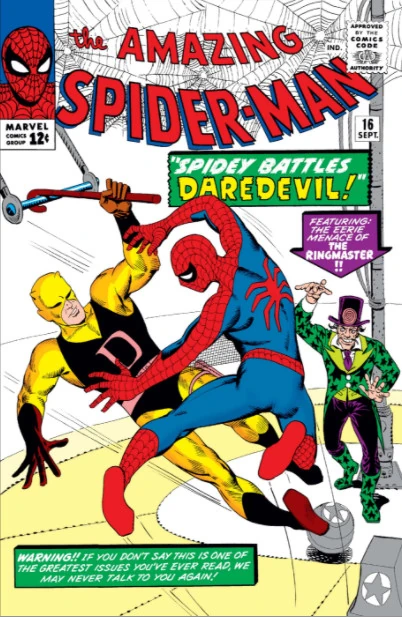
many to choose from, aside from obvious favorites like Amazing Spider-Man
and Avengers! Loved all the Giant-Size books, loved anything by Steve
Gerber. Through the end of the decade I probably averaged about 20 titles a
month, mostly Marvel but with a few DC's here and there. These seven years were
filled with great creators and great books -- Englehart, Shooter, Byrne, Perez,
Rogers, and so on. Such a time for variety and experimentation -- truly
something for everyone!
There were so
many to choose from, aside from obvious favorites like Amazing Spider-Man
and Avengers! Loved all the Giant-Size books, loved anything by Steve
Gerber. Through the end of the decade I probably averaged about 20 titles a
month, mostly Marvel but with a few DC's here and there. These seven years were
filled with great creators and great books -- Englehart, Shooter, Byrne, Perez,
Rogers, and so on. Such a time for variety and experimentation -- truly
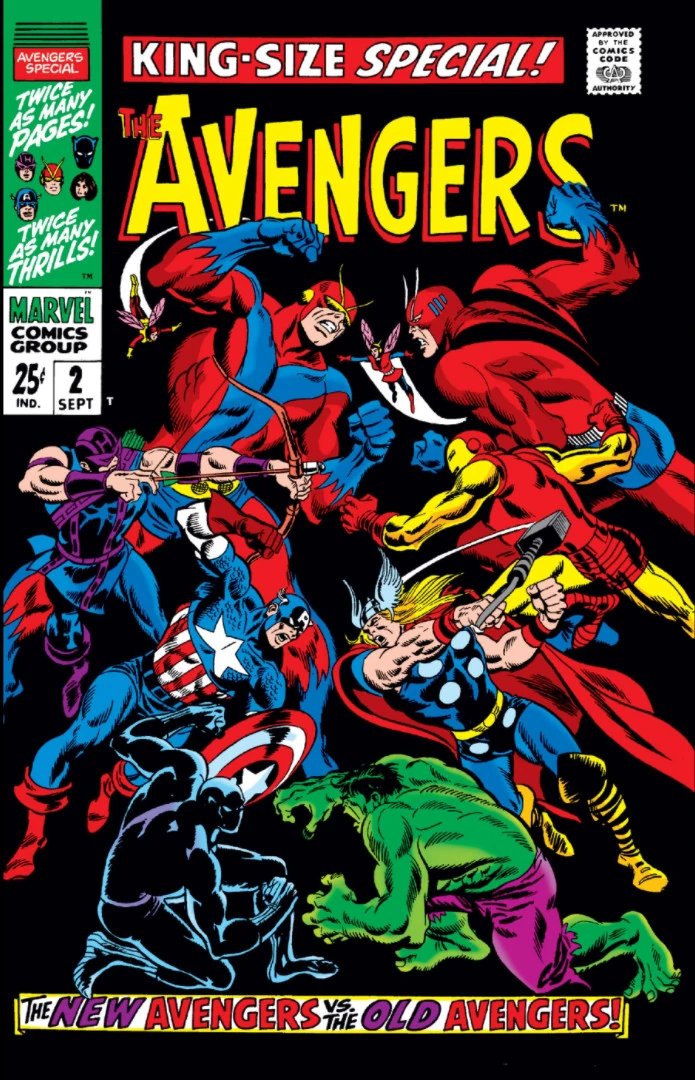
something for everyone!Prior to '74, I was in an Archie phase, which vanished upon my intro to Marveldom (although the Archie interest would return some years later in the form of back issue hunting, especially some earlier 50s and 60s comics). However, many books from the Silver and early Bronze Age soon joined my collection -- particularly Marvel Team-Up, Conan, ASM, Fantastic Four, and Avengers (really loved that "Avengers/Defenders War"-- that one title sure had a bounty of great storylines).
But by 1981, I was in college -- money was tighter, and my interests were shifting. Within just a couple years my comic purchases would drop to less than 10 per month, including several Indie titles like Journey, Neil the Horse, and Mr. X. Many mainstream titles started to lose their appeal for me. I kept up Spider-Man as my longtime favorite, but even quit on him after the Defalco-Frenz period. By the mid 80's I was only buying Byrne's Fantastic Four regularly, and irregular issues of Spectacular Spider-Man, Action Comics, Batman and a few others. I quit X-Men after Paul Smith left, and by the end of the 80s I was mostly out of comics.
Not entirely, though -- there were books from that era, and later, that I bought and enjoyed. McFarlane's run on Amazing Spider-Man brought me back, and I really enjoyed them. Comico ran a fine Jonny Quest series I collected in its entirety. There was Watchmen, Crisis on Infinite Earths, and in '91 DC did a fun miniseries with Angel and the Ape. I started buying “Simpsons Comics” when they debuted. So looking back, even though the comics wonderland I explored in the 70s seemed long gone, there was still some good reading to be had. No doubt there was much more that I missed out on completely (young parenthood really limits that disposable income).
Doug: You know, because of the timing of my hiatus, I never warmed to the Indies. In fact, it wasn't until Dark Horse began the "Legend" imprint that I regularly bought independent comics. So all the talk from our friends of Cerebus, Mister X, Elfquest, et al. has me on the outside looking in.
 And to respond to some of the comments from last weekend, I
did feel that the overall quality of art at Marvel had declined during my
absence as compared to when I quit buying. I am not saying there was no quality at all -- maybe I'm prejudicial to what I'd known, and I felt that the "House style" was changing.
And to respond to some of the comments from last weekend, I
did feel that the overall quality of art at Marvel had declined during my
absence as compared to when I quit buying. I am not saying there was no quality at all -- maybe I'm prejudicial to what I'd known, and I felt that the "House style" was changing.My best guess is that I was a regular comic book buyer by the time 1973 rolled around. Please understand, though, that at the ripe old age of 7, "regular" meant that I had a very short stack of comics. But I would ask for them when I saw them, and soon gravitated to the Avengers, the Fantastic Four, and Amazing Spider-Man. By the time I was 10 (1976), I was buying a whole bunch of titles -- when I could find them. The three just mentioned were soon joined by Peter Parker, Marvel Team-Up, Marvel Two-In-One, X-Men, Teen Titans, Superboy and the Legion of Super-Heroes, the Champions, Thor, the Secret Society of Super-Villains, Batman, Batman Family, Invaders, Green Lantern/Green Arrow, Daredevil, Super-Villain Team-Up, Conan, the Giant-Size, Annuals and Dollar Comics, Marvel Treasury Editions and DC's Limited Collector's Editions, and many more. I would continue as such right up until the summer of 1980 when I'd graduated the 8th grade and thought I was "too cool" for comics as I entered high school. As I've remarked, comic books and the like simply did not have the sort of social acceptance that they do now, and as a football player and a young man definitely on the market for a steady girlfriend, I made the (erroneous) assumption that all that would not mix. It would take until my sophomore year of college before I got my mind right on that subject.
So what have I liked since the "return" and before the final "departure" (back in 2005)? I have enjoyed The Dark Knight Returns on many readings. I initially liked John Byrne's revamp of Superman, and really got into George Perez's Wonder Woman. All of that came after Crisis on Infinite Earths, which in spite of what it did to the Legion, Supergirl, and other characters I'd really liked, I enjoyed. Retroactively, I thought the Roger Stern/John Buscema/Tom Palmer run on the Avengers was quite good. I stuck with Amazing Spider-Man way past when it stopped being fun (pretty much when Todd McFarlane left). Frank Miller's Sin City stories were solid, as was Jeff Smith's Bone. I could go on, but I'll just say this -- and maybe this is from the perspective of a child -- I have never been as excited to read comics as I was when I was a wee fellow. In fact, the things I get giddy for nowadays are the announcements of collections of material from the Bronze Age. When I first saw solicitations for the Marvel Firsts series... Be still, my heart!
Martinex1: The
bell curve of my primary collecting phase ran from the Summer of ’77
into 1981. I can almost track my attention to comics around the ebbs
and flows of Avengers’ stories as that was the group I followed most
attentively. So the
John Byrne and George Perez era of art on that team book really defined
my heyday.  During that time the Claremont-Byrne
Uncanny X-Men were also peaking. The Micronauts and ROM made their first appearances. And the Michelinie-Layton
Iron Man stories were revitalizing the title. That era of
comics is by far my favorite and one I return to often. I was very much
a Marvel fanatic at that time. My attention trailed off a bit as I
turned thirteen, entered high school, and The Avengers just passed their 200th issue.
During that time the Claremont-Byrne
Uncanny X-Men were also peaking. The Micronauts and ROM made their first appearances. And the Michelinie-Layton
Iron Man stories were revitalizing the title. That era of
comics is by far my favorite and one I return to often. I was very much
a Marvel fanatic at that time. My attention trailed off a bit as I
turned thirteen, entered high school, and The Avengers just passed their 200th issue.
 During that time the Claremont-Byrne
Uncanny X-Men were also peaking. The Micronauts and ROM made their first appearances. And the Michelinie-Layton
Iron Man stories were revitalizing the title. That era of
comics is by far my favorite and one I return to often. I was very much
a Marvel fanatic at that time. My attention trailed off a bit as I
turned thirteen, entered high school, and The Avengers just passed their 200th issue.
During that time the Claremont-Byrne
Uncanny X-Men were also peaking. The Micronauts and ROM made their first appearances. And the Michelinie-Layton
Iron Man stories were revitalizing the title. That era of
comics is by far my favorite and one I return to often. I was very much
a Marvel fanatic at that time. My attention trailed off a bit as I
turned thirteen, entered high school, and The Avengers just passed their 200th issue.
I
continued to collect intermittently with some great spikes along the
way as friends and I still had those general interests, but my passion
for comics never had the same steam it had in the late 70’s.
But I must mention an additional highpoint and that includes comics from 1969 to 1971. As I’ve mentioned before, my cousin supplied quite the selection of “old” comics and most were from this time period. The timeframe rides the wave when Marvel was in conversion from 12 cent to 15 cent comics. And like those in the above years, I have a particular fondness for these issues. So I was exposed very early to both John and Sal Buscema’s art on the Avengers, from the Kang-Grandmaster challenge to Brainchild and the Squadron Supreme to the start of the Kree-Skrull War, and read those particular books over and over again. Jack Kirby was finishing up his tenure on the Fantastic Four. And early issues of Captain Marvel and Sub-Mariner had my attention. That really shaped my expectations for more current off-the-rack comics. It also made my enjoyment of books like What If in the late ‘70s so acute as I was familiar with the backstories.
I missed out on most comics from 1972 to 1975, so it is interesting that I do not look as favorably on the Marvel comics with the window bordered covers. And in Avengers’ history, I am not a big fan of the Englehart period. It really just goes to what I was exposed to at a particular age.
In my frequent returns to comics over the decades, I have enjoyed the Stern-Buscema Avengers, particularly the “Under Siege” arc. I’ve liked books like The Exiles, Mark Waid’s run on The Flash, and Busiek’s Thunderbolts. But comparatively, I always gravitate to the comics of my youth.
But I must mention an additional highpoint and that includes comics from 1969 to 1971. As I’ve mentioned before, my cousin supplied quite the selection of “old” comics and most were from this time period. The timeframe rides the wave when Marvel was in conversion from 12 cent to 15 cent comics. And like those in the above years, I have a particular fondness for these issues. So I was exposed very early to both John and Sal Buscema’s art on the Avengers, from the Kang-Grandmaster challenge to Brainchild and the Squadron Supreme to the start of the Kree-Skrull War, and read those particular books over and over again. Jack Kirby was finishing up his tenure on the Fantastic Four. And early issues of Captain Marvel and Sub-Mariner had my attention. That really shaped my expectations for more current off-the-rack comics. It also made my enjoyment of books like What If in the late ‘70s so acute as I was familiar with the backstories.
I missed out on most comics from 1972 to 1975, so it is interesting that I do not look as favorably on the Marvel comics with the window bordered covers. And in Avengers’ history, I am not a big fan of the Englehart period. It really just goes to what I was exposed to at a particular age.
In my frequent returns to comics over the decades, I have enjoyed the Stern-Buscema Avengers, particularly the “Under Siege” arc. I’ve liked books like The Exiles, Mark Waid’s run on The Flash, and Busiek’s Thunderbolts. But comparatively, I always gravitate to the comics of my youth.
Karen: It's difficult to single out just one period of time -I can think of three distinct phases where I felt very absorbed by what was going on in comics. The first would have been around 1974-1978, and I was focused almost exclusively on Marvel, with Legion of Super-Heroes being my only real exception.
 I was enamored with practically everything Marvel was putting out - all the mainstream books, like Avengers, Fantastic Four, Spider-Man, Captain America, Thor, but also the more unusual titles, like Warlock, Defenders, Iron Fist, and of course, the all-new, all-different X-Men. In fact, although my husband and most of my geeky friends think of me as an Avengers fan first -and indeed, Doug and I first became friends on the old Avengers Assemble board - I realize that X-Men was the book that gripped me the most as a pre-teen. It was the one title I just read over and over until the next issue came out -and it was bimonthly at first, so it was a long wait.
 Then, after a slower period, around 1982 I became interested in some of the independent titles like Love and Rockets, Nexus, Elfquest, along with titles from the Big Two that were outside their mainstream. At this time, I was working in a comic book store, so it was easy for me to sit and read practically everything, and I was able to take a chance on books that I might have passed up otherwise. Finding stories outside the super-hero genre was exciting; it opened me up to other possibilities for the medium.
But once I went off to college, my buying became less frequent. I still managed to keep up with some stories - I got all four issues of Batman: The Dark Knight when they came out - but comics weren't a priority for me anymore. After I graduated, I would occasionally pop into a comic store and pick up a few books, to try to get back into the hobby. But I found much of the Marvel universe to be impenetrable -particularly X-Men, which had expanded to galactic proportions. I felt like I was done.
Oddly enough, I was pulled back into comics initially by a DC Comic! I started reading JSA by Geoff Johns and Steve Sadowski around 2000, and this toehold evolved into 12+ books a month at its peak, until about 2006, when I felt I could no longer relate to the characters or enjoy the stories in most of the titles any more. I pick up an occasional book now but mostly focus on TPB collections of back issues, or non-super-hero trades, like the recent Star Trek/Planet of the Apes crossover. I would agree with Martinex though -seemingly as I get older I find myself more drawn to the books I loved most as a young child. It's delightful when I can find something new that gives me the same feeling!
Doug: So there you have it from us. Hopefully we get a nice conversation with lots of participation. Have a nice weekend, everyone!