Showing posts with label TwoMorrows Publishing. Show all posts

Wednesday, July 22, 2015

Comic Events When They Actually Meant Something!

Karen: I have to 'fess up -originally this post was going to be a piece of shameless self-promotion. It was going to be a 'Bronze Age Babies Bulletin' that plugged the new (and super-cool) Back Issue! # 82 featuring Bronze Age Events, on sale soon from Twomorrows Publications in print and digital format (you can get it here). In this issue, I get to discuss the glory of the Avengers-Defenders War (or Clash, if you prefer) with such greats as Roy Thomas, Sal Buscema, and most of all, Stainless Steve Englehart! It is always a blast to have the chance to interview folks who had such a tremendous impact on my youth. As the theme of the issue is events, there are also articles on the great JLA/JSA  team-ups, Crisis on Infinite Earths, Secret Wars, the Infinity Gauntlet, and more.

Karen: But thinking about all those great old Bronze Age comic events made me want to do more than just a plug for the issue. It made me want to discuss what made events so much more special and exciting back in those days. It seems like now, all we have are events. Certainly the Big Two shape their entire comics line around a major event (or two) that typically lasts the entire year, and this happens every year, and has for some time now. The Event unfolds in its own book, touches most of the other titles in the line, and also gives birth to ancillary titles. Look at  Civil War - according to an article on IGN, it encompassed 93 individual comics. 93! This wasn't an event, it was a major financial commitment.
Avengerin' and Defenderin' cover by John Byrne

Karen: It seems to me there are a couple of things that really distinguish the events of old from today's "mega-events." One is that events used to actually feel significant. It's like that saying -"when everyone's special, no one's special." The same could be said for comic events. They used to be something that happened occasionally, and in a more organic way. 

Karen: I know when I worked on my article on the Avengers-Defenders War, I recalled that at the time the books came out, it felt really important -a cross-over like that, between two team titles, was a real first. Also, like the JLA/JSA extravaganzas, it  was a summer event, unfolding over the school vacation months of 1973, which lent it even more of a special air. In fact, writer Steve Englehart wanted to do something special for that summer, since Marvel wasn't producing any annuals that year. So as a young reader, it was a great treat while you were on school break -assuming you could find all the issues on the newstand!

Karen: The other thing that makes the earliest events stand out is that they were put together with a sense of sincerity -there was a desire to do something extra-special, something that would thrill the fans, something that would be fun. Certainly that was the case with the JLA/JSA meet-ups each year. Those annual events were eagerly awaited by comics fans each year, initially featuring just the two teams, later expanding to sometimes include other groups like the Legion of Super-Heroes, the Freedom Fighters, the Seven Soldiers of Victory - hey, the more the merrier! These issues really gave fans some bang for their buck -or 15 cents, whatever the case might be. Likewise, the Avengers-Defenders War took Marvel's two biggest teams at the time and pitted them against each other in one-on-one (or two-on-one) match ups, just because it would be a hoot. There really wasn't an ulterior motive at work. Similarly, the Marvel annuals, while hit or miss, sometimes fell into this category as well, providing fun and sometimes important events, like Fantastic Four Annual #6, with a battle against Annihilus and the birth of Franklin Richards; or the one-two combo of Avengers Annual #7 and Marvel Two-In-One Annual #2, with the huge smack-down of the Avengers, Captain Marvel, Warlock, The Thing, and Spider-Man versus Thanos. Now those were events -and they only lasted an issue or two!

 Karen: We can see the seeds of today's bloated mega-events in the later Bronze Age events. Crisis on Infinite Earths was not only a 12 issue series but it crossed-over to numerous titles (don't forget the red skies!), and of course, had a massive (some might even say devastating) impact on the entire DC line. Secret Wars had less of an impact on titles and characters -the black Spider-Man costume which later became Venom was probably the most lasting effect -but of course, the mini-series genesis was in a toy tie-in, not exactly the most noble of purposes. At this point, the events became bigger and also began to serve purposes other than just being a cool thing to do for the fans. The companies soon realized that the fans would dutifully buy up all the issues connected to the event, and before long, we were plagued with things like The Mutant Massacre and Invasion! With few exceptions, the event became more about money and less about someone coming up with a neat story idea.

Karen: And that's how we got where we are today, with the perma-event situation. Since I'm no longer a regular comics reader, I don't feel the pain like I once did, but I still sympathize with those who try to keep up with it all. I can't help but think that the impact of these events is far less when something huge and universe-shattering occurs every single year. Me, I still get a thrill when I see the Avengers and Defenders go at it, or Spider-Man working up his nerve to face Thanos. And I didn't have to buy 32 issues to understand the whole story.

Tuesday, April 14, 2015

BAB Classic Rewind: Inkers -- Just What Should Be Their Role?

  This post was originally published on July 10 2010
It was re-published as part of our BAB Firsts feature on January 23 2015

Doug: Welcome back to the post that just keeps on running. We are revisiting this topic yet again, as we have something to add to it. Our pal pfgavigan was gracious enough to submit another strip for your perusal and commentary. He based this one on the post you're about to read (again). It struck a chord with him back in January, so he submitted his own topical response. It rests at the very bottom of today's post, and will hopefully generate even more conversation. I'd throw out, too, that today we could discuss not only inkers in general, but bad fits. Of course we know those great fits -- Terry Austin and anyone would be tops on that list. But what of the mismatches? Thanks, pfg, and to all others who will dive back in today!

Doug: I have inking on my mind today. Part of my preoccupation concerns the current series Karen and I are running on Mondays in July, what we're calling "George Perez July" and featuring four annuals with his pencil work. Last week's peek into Avengers Annual #6 showed the inks of Mike Esposito, et al. However, tomorrow and a week later we're going to see Perez under the influence of one Pablo Marcos. In the opinions of the Bronze Age Babies, the results are less than stellar. Fortunately, when we delve into X-Men Annual #3 to close out the feature, we'll be inspecting the embellishment of super-inker Terry Austin. Austin's run with John Byrne in the regular X-Men title is among the finest series of issues ever published.

Doug: The other reason I'm spending the better part of a Saturday fretting over these issues is the recent e-mail I received from TwoMorrows promoting their upcoming retrospective on the career of Vince Colletta. Now when any discussion of inkers comes up, Colletta's name is sure to be at the forefront of the "disdain" side. For further information on not only the book but on what Vinnie did to Jack Kirby, check out the preview of the book. By the way, the tome will hit shelves on July 30, and can be ordered at this link.

Doug: If you scroll down our sidebar, I've added a little retrospective of the pencilwork (some with inks) of John Buscema. After the Silver Age, Buscema was known mainly for providing breakdowns over which the inkers had some liberty in bringing the finished page to you. Of course one of Buscema's longest-running collaborators was Tom Palmer in the pages of The Avengers. Palmer seemed to stay pretty faithful to Buscema's "look". John was known to say that the only two inkers he preferred over his pencils were himself and his brother Sal. Recently I reviewed the TwoMorrows biography of Sal -- you can see his comments on inkers here.

Doug: What we'd like to do is begin a new feature on the blog that we'll call The Open Forum. Please feel free to use this like a message board. What I want to know today is your opinion on inkers you love, hate, what their role is, are pencillers too picky, etc. How do you feel about Colletta erasing parts of Kirby's panels? Do you think it was good or bad that Joe Sinnott somewhat "unified" the look of the Fantastic Four while inking over Kirby, Romita, Buscema, Perez, and Byrne? Are there some pencillers who make good inkers (I always thought Gil Kane was best on the Amazing Spider-Man when Romita inked the book), and others who never mastered the craft? Have at it...

Doug: Below is another gallery of John Buscema's work, featuring his layouts, tight pencils, inks on his own work, inks by Dave Cockrum (from Avengers #125) and by Dan Adkins (the Captain Mar-Vell frame). Submitted for your appreciation and inspection.


Wednesday, January 21, 2015

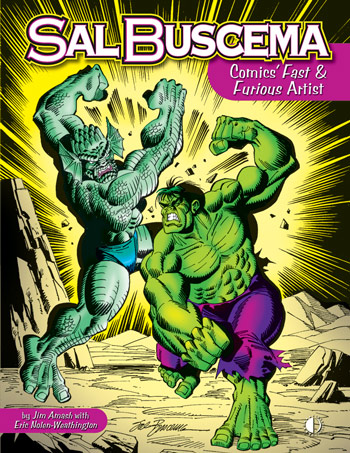
BAB Firsts - BAB Book Review: Sal Buscema, Comics' Fast and Furious Artist


This post was originally published on April 2 2010

Doug: Last December Karen and I showed some things on our Christmas wish lists. On March 19 I finally got one of my wants -- TwoMorrows' Sal Buscema: Comics' Fast and Furious Artist, by Jim Amash with Eric Nolen-Weathington. I received the standard trade paperback edition, which retails for $26.95. You can order it here (at a slightly discounted price). It was worth all of the publishing delays...

As I usually do with TwoMorrows' books and magazines, I took a quick thumb-through upon unpacking it. I'm not sure they could have crammed any more art into this volume! If you wanted samples of Sal's work, then you'll get it here (Disclaimer -- the illustrations I've included with this post are examples of original artwork that was for sale on eBay when I wrote this post; these art pages are not in the TwoMorrows book). In fact, the last 64 pages are a B&W and color art gallery featuring sketches, commissions, and tons of published covers and art pages. All of that is in addition to literally hundreds of exhibits from Sal's career shown throughout the book. The format of the text is one long interview between Jim Amash (best known as one of the major contributors to Roy Thomas' Alter Ego magazine) and Sal. To say it's an exhaustive interview might be an understatement. Amash covers all of the points of not only Sal's career, but his life. I had the one-time pleasure of visiting all-too-briefly with Sal at the Chicago Comicon (in the late 1990's), and his gentlemanly manner certainly shines through in Amash's interview.

Fans of Sal's big brother John (eight years Sal's senior) will be extremely excited to read all of the anecdotes about John's career, as well as the interaction between the two. I at first wondered at the directness of interviewer Amash's questions in regard to John -- in a book about Sal, it seemed as if Amash jumped right in about the impact of John's career on the family, on Sal, about the two being compared, etc. Sal's love for his brother just shone through, and any discomfort I had was quickly laid to rest. In a market that is all too thin on the life and work of John Buscema, this biography of Sal dovetails nicely with Vanguard's The John Buscema Sketchbook, Pearl Press's John Buscema: A Life in Sketches, and the out-of-print SQ Productions The Art of John Buscema. Whereas the first and last books feature interviews with John, this latest Buscema book features comments from Sal himself on John's career. Of particular note is Sal's clearing up once and for all the matter of John hating comics. Sal affirms that John didn't hate comics; John hated drawing buildings! John wanted to draw people, and particularly loved drawing Conan and Tarzan because there were no rules -- the fantasy settings allowed John's imagination to run wild and he could draw whatever he wanted!


One of the most interesting series of quotes in this book concerns Sal's remarks about inkers who have embellished his work over the course of his career. While he admits that he holds no one in disdain and would never deny a man his livlihood, he does have negative words for Mike Esposito, Joe Staton, and Ernie Chan.
He says that although he liked Joe Sinnott inking over his pencils, John strongly disliked Sinnott's inks -- not Sinnott the man, but the impact Sinnott had on John's pencils. Sal remarks that while Sinnott is certainly considered one of the best inkers in the business, when Joe inks a penciller, it's Joe you see. I'd argue that Sinnott is what gave the Fantastic Four its visual identity over 2+ decades, but I understand what is being said. Oh, one other nugget -- Sal reveals that John loved Dan Adkins inks on the Silver Surfer. What the...?! I have many a'time commented that I think Adkins was even heavier than Sinnott over Big John. I was shocked to read this!

Sal also discusses his collaborators through the years. Of all of the writers he has worked with, he praises Len Wein and Steve Englehart above all others. Wein was his longtime scribe on The Incredible Hulk (I did not realize that Sal handled the art chores on that title longer than Herb Trimpe), and Sal raves how they just clicked -- Sal knew exactly what Len wanted him to draw, and Len often couldn't believe how Sal returned pages with ideas drawn just as he'd envisioned them. Sal gives the reader further insight to the oft-discussed "Marvel method", and takes a shot at current writers and their too-constricting plot synopses. In Sal's opinion, artists of today are confined. As for Englehart, Sal places him just below Wein, yet raves about their tenure on Captain America. Sal does hold some reservation, though, for the climax of the Secret Empire storyline, and further questions Steve Rogers becoming Nomad. To Sal, Rogers and Captain America cannot exist apart. Sal also discusses his relationship with Jim Shooter. At first amicable, they parted under less-than-friendly circumstances due to Shooter's alleged micro-managing of Sal's art on Amazing Spider-Man Annual #21: the wedding issue. This was detailed in Back Issue #23
. It's those little stories that make this book a really fun, nostalgiac, insightful, and so much more-kind of read.

The table of contents is --

Introduction by Walter Simonson

1. Inspiration All Around
2. A Heroic Departure
3. How to Break In the Marvel Way
4. The Workhorse Hits His Stride
5. A New Start With a Different Company
6. The Craft of Creating Comic Book Art


Art Gallery
(pssst... an Index would have been a nice addition!)


You can find a chronological listing of Sal's work by clicking here.

Friday, April 19, 2013

BAB Book Review: Lee and Kirby -- The Wonder Years


Lee & Kirby: The Wonder Years (November 2011)
AKA The Jack Kirby Collector #58, MSRP $19.95 (cheaper online)
Mark Alexander

Doug:  Here's a strong suggestion for you -- buy this book!  Seriously, if you liked Sean Howe's Marvel Comics: The Untold Story, if you're a fan of the Silver Age Fantastic Four, or if you are interested in the never-ending debate of "who did what" in regard to Stan Lee and Jack Kirby, then you need to own this.  I bought this when it was first available, but as can be my habit did not immediately get to it.  It's been long on the "to read" list, and as March turned to April I sat down to read it.  Well, that took only a couple of days, as it is just gripping.  Author Mark Alexander goes where others have gone before in terms of Marvel history and some anecdotal evidence skewed toward either Lee or Kirby -- but it's his own point of view often interjected that makes this part history, part blog, and part biography.  The outcome is a well-wrapped package that showcases a partnership that one could say was to comic books what Lennon and McCartney was to popular music.  NOTE:  I'll supply just a few page samples in this review.  At the end of the post there will be a link to the TwoMorrows site, where you can open a much longer .pdf preview of the book.  Thanks.

It's been customary for me over the years to do my book reviews in a "The Good, the Bad, and the Ugly" format.  If you're expecting that here, you won't find it.  As I finished the book, I couldn't help but feel two things -- I'm glad I bought this those many months ago (and should have read it earlier), and I wanted to hook up the FF dvd-rom and read each issue of the Lee/Kirby run and see if my impressions agreed with Alexander's.  Here's the way the book is organized, table of contents first:
  • Introduction
  • "Fourword"
  • Prologue
  • The Knockoff Champion
  • Winds of Change: The 1950's
  • The Days of Dr. Droom
  • Genesis
  • The Early Years
  • Momentus
  • Apotheosis
  • Decline
  • Epilogue
  • A New Take on an Old Classic
  • This is a Plot?
  • Afterword
  • Source Notes
  • Postscript
As you might guess from the chapter titles, the first three are basically histories of various periods in Timely/Atlas/Marvel.  Much attention is paid to Martin Goodman, the owner of the various incarnations of the comics publishing companies that would eventually become known as the "House of Ideas".  We then are walked through the ins and outs of the post-War years, the monster phase, etc.  I don't recall there being any groundbreaking news in the first part of the book, so if I was going to have a "the Bad" section this would have to be it.  But I wasn't put off by it -- if nothing else, it was nice to see stories I'd read from the typewriters of Les Daniels, Sean Howe, et al. corroborated in another book.

Once Alexander gets to the Lee/Kirby collaboration on the Fantastic Four mag, it's really a buckle-your-seatbelt ride.  Perhaps the most refreshing thing about Alexander's style is that in spite of the fact that this book was published within the sometimes-Kirby-apologist The Jack Kirby Collector, it's a very, very objective study.  In the Introduction, publisher John Morrow tells us that The Wonder Years was originally imagined as a long article or series of articles in TJKC.  Mark Alexander had published articles in the magazine before, and through his relationship with Morrow was able to make the case that this could be a book.  The results are very nice, as this has all of the visual qualities of a regular issue of TJKC, but with a singular focus.  Anyway, back to Alexander's impression of Stan Lee...  From the chapter "This is a Plot?":  A funny thing happened on the way to this book.  From the outset, a conscious decision was made to avoid any "who did what" debates regarding Jack and Stan's individual contributions to Fantastic Four.  But with no preconceived agenda whatsoever, we kept finding more and more evidence that shows Stan was actively involved in the plotting of Fantastic Four, to some degree or another, during Kirby's entire run on the series (p. 146).  For me, it's the willingness to report what was dug up, to cite the folks who were there (Flo Steinberg, Roy Thomas, Marie Severin, and Sol Brodsky), and then to just let the reader reflect on his or her own prejudices that makes this a great read and a nice resource to own.

 In addition to the chapter titles, Alexander divides his examination of the Lee/Kirby years by eras based on his own observations.  Interspersed throughout the text are long sections of musings on each of the 102 issues on which the dream team collaborated.  He calls these sections by the name he's given to each period, and then includes his thoughts "At a Glance".  These pages compose what I would approximate as the "blog element" of the book, and those divisions are:
  • The Age of Innovation (covers #'s 1-6)
  • The Ayers Age (covers #'s 7-20 and Annual #1)
  • The Roussos Period (covers #'s 21-27)
  • The Stone Age (covers #'s 28-38 and Annual #2)
  • The Transitory Period (covers #'s 39-43 and Annual #3)
  • The Cosmic Era (covers #'s 44-67 and Annuals #4-5)
  • The Age of Inertia (covers #'s 68-102 and Annual #6)
In each of these capsules Alexander is careful not to give us a plot synopsis -- he remarks late in the book that for anyone who wants such a thing, copies of the Official Marvel Index to the Fantastic Four can be found for cheap.  Instead, Alexander helps us note trends over a span of issues, gives his take on the awesomeness (very rare -- basically Dr. Doom and Galactus) or lameness (the Red Ghost -- because according to DC, everything's better with monkeys) of a given issue's villain, and innovations wrought by Kirby (especially when a collage is included).  Additionally, each cover is shown and its inker is noted.

Mark Alexander is not hesitant to heap praise on Fantastic Four or on either or all of the book's creators.  Conversely, he is quick with criticism as well.  Of note, he really has harsh words for the transition of Madame Medusa from a sexually-charged villainess who, in the author's opinion could have gone on to be a major villain, and to Stan Lee for his major faux pas in #99 where he reveals that Crystal and Black Bolt are brother and sister.  Wait...  then that would make Black Bolt and Medusa... oh my.  He also traces developments in the magazine that can be directly tied to mandates from Martin Goodman, such as the order that multi-part stories cease to be written.  Another example of Goodman's influence was the switch away from "twice-up" 12"x18" bristol board to the smaller 10"x15" art board.  Kirby felt especially constrained by the smaller drawing surface, and Alexander notes two direct results -- more close-ups of characters, and a regular use of four-panel lay-outs on Kirby's pages.

As with any TwoMorrows publication, they don't skimp on the art.  They've done a nice turn for us in this book with plenty of finished art that showcases Jack's various inkers.  But as any regular readers of The Jack Kirby Collector know, it's the penciled pages that are the real treasures and there are plenty of samples from throughout Jack's 102-issue run to look at.  As I mentioned, every FF cover from Stan and Jack's collaboration is reproduced (albeit in a thumbnail-sized image) as well.  I'll leave you with this, and you can consider it homework.  If you click on this link, it will take you to one of the 1978 Fantastic Four cartoons from Depatie-Freleng.  I'll caution you ahead of time that this was the H.E.R.B.I.E. the robot era.  Ugh.  But the reason I mention it is that Jack's entire storyboard for the film is included in The Wonder Years.  I thought that was totally unexpected, and a very nice touch.

Did I mention that you should buy this book?

Wednesday, January 9, 2013

BAB Classic: Every Color But Black: Legion of Super-Heroes 216


Superboy and the Legion of Super-Heroes #216 (April 1976)
"The Hero Who Hated The Legion"
Cary Bates-Mike Grell


Note: This post was originally run on January 6, 2010.

Karen: Doug and I are both big Legion fans, and we've discussed a number of Legion stories we'd like to review. We have reviewed a few stories over in our old blog (Two Girls, A Guy, And Some Comics), but we only looked at Silver Age stories, not Bronze Age. And for us, Bronze Age is really our favorite era. Legion was the first DC comic I began reading regularly, shattering my former Marvel zombie existence. I loved the Legion and its fantastic, futuristic adventures. So it might seem odd that I'm inaugurating our Bronze Age Legion reviews with a comic I can't stand.


Doug: I'd echo your sentiments, Karen. Legion was probably the DC I was most committed to; I did pick up Teen Titans, Batman and Detective, and Secret Society of Super-Villains, but Superboy and the Legion was always the book I'd take over the others if and when I had to choose.

Karen: Legion #216 introduces us to Tyroc, the first black Legionnaire. Ordinarily, such integration is something I would applaud. But this issue is so incredibly myopic and insensitive, that it's all I can do to keep myself from throwing it across the room. Even when I first read it at the age of twelve, I knew something didn't smell right, even if I couldn't exactly explain why.

Doug: Being MUCH younger than you, Karen (I was only 10 when I read this), I also recall thinking this was a bit strange. I'd been brought up in the era of busing and instructed by my parents that a person was to be valued regardless of skin color, religious persuasion, etc. So this separatism was strange to me.


Karen: You see, dear readers, in the wonderful Earth of the 30th century, it seems that all black people have segregated themselves to an island, so they can avoid everyone else -whom they apparently hate. As a tour shuttle driver says, "Below is the island-city of Marzal, an independent, totally self-sufficient community...populated by a black race that wants nothing to do with the outside world!" Ooh, a black race! Wow! It makes them sound as if they aren't even human.


Doug: Say what you will about the Legion reboot in the 1990's, but they created Legionnaires who weren't humanoid. It seemed like back in the Silver Age the only thing they could do to differentiate sentient "races" was to alter skin color -- green, blue, orange, etc. This "effort", and it comes off that way, to "diversify" the Legion was so forced and flagrant... and it continued just several months later with the introduction of Dawnstar. So I guess then they had "red" skin, too. Bro--ther...
Karen: The Legionnaires
-Superboy, Karate Kid, Brainiac 5, and Shadow Lass - head to Marzal to recover a downed satellite, which actually contains stolen jewels. A group of thieves is also after the jewels. On the island the Legionnaires encounter only hostility from the residents. A native hero, Tyroc, who has strange (poorly defined) sound powers, crosses paths with both the Legion and the thieves. He makes it clear he wants nothing to do with the Legion, and feels the Legion has ignored the people of Marzal when they were in need, possibly because they are black.


Doug: I thought it was hilarious when Brainy interupted Cosmic Boy and offered "the plan", only to be shot down with a rebuke of "Not so simple, Brainy!" How often do you suppose that ever happened?? And Tyroc... I agree. We don't understand his powers and are given no background. He states that he is Marzal's champion, but do others among his "people" have similar powers? Is he a mutant? Does his costume somehow give him his voice abilities?

Doug: Additionally, I just really think that scribe Bates was pinning responsibility for the problems of blacks in America squarely on the blacks. The separatism, while at the same time blaming the Legion of all of Marzal's ills, seemed to fly in the face of LBJ's Great Society. I realize we were almost a decade removed from that by the time this saw the spinner racks, but still.

Karen: Tyroc infiltrates the thieves. They find the sat
ellite only to discover it has become lethally radioactive. Exposed to the deadly radiation, a struggling Tyroc signals Superboy with an ultrasonic whistle. He seems surprised that the Legion would help him. We then get an unbelievably lame statement from Superboy about how the Legion is "color blind! Blue skin, yellow skin, green skin [pointing to Shadow Lass, Karate Kid(!), Brainiac 5]...we're brothers and sisters...united in the name of justice everywhere!" Tyroc decides he's been wrong about the Legion and will take them up on their offer to try-out for the team.

Doug: Pretty quick change of heart, don't you think? Didn't it seem to say that no matter how screwed up you think we've made you, we can still make you better -- hey, you need us! It was almost like the Legion was the ticket out of the ghetto.

Karen: I guess T
yroc could be "validated" by joining the right-thinking Legion! Just how in the world did anybody at DC think this was a good story? It's interesting to note the comments of artist Grell in a recent issue of Back Issue magazine (#33), where he says of this story, "Every couple of months I would pester them: when are we going to do this black Legionnaire? Finally they came up with one of the sillier powers I ever saw: Tyroc's. I'm surprised they didn't name him Tyrone, because the ultimate explanation for why there were no black people ever in the Legion of Super-Heroes...all the black people had gone to live on an island. I wonder what Martin Luther King would have to say about this? Weren't these people alive in the 1960s? Were they completely unaware of the civil rights movement?"

Doug: Grell tells similar stories in The Legion Companion from TwoMorrows, as well as Back Issue #14. He does contradict himself as to his original intent, which was to have a guy-gone-bad who happened to be black. In BI #14, Grell suggests that it was in Superboy #207; in The Legion Companion, he says it was in #210 ("Soljer's Private War"). Whichever it was, he was told by Murray Boltinoff that if they had a black character who was bad, they'd catch a ton of grief from their black readers. Grell contends that he protested, left the art the same, and the figure was merely colored pink instead of brown. According to Grell, anyone who looked closely could have told what was going on. Grell was assured that a black hero was in the works, and that he would be in the Legion. According to Grell, he was basically handed Tyroc and told to design the costume.
 

Karen: As you mention, there's this bizarre implication that the problem resides with the black people of Marzal alone - that they are the ones who are prejudiced and overly-sensitive. It sounds like the kind of argument you often hear from people who say racism and prejudice are over-exaggerated problems. You know, the same sort of people who claim they aren't racist by saying, "Some of my best friends are black (or Asian, or Hispanic, etc)". Or the Louisiana judge recently in the news who refused to marry inter-racial couples but said he wasn't a racist, that he even let black people use his bathroom! Gee, how open-minded of him.

Doug: But the thing about stereotypes is that at some point they're true -- do you think that's what Bates was after? But that should never be the focus -- labeling, classifying... And that's exactly what this book did. You and I have both stated that even as youngsters we felt something wasn't right. But how many other impressionable young minds didn't catch on? Did this book do damage in the era of busing and integration? Hey, the race riots in America's high schools (I recall my aunt being released early from school several days because it wasn't safe to be there) were only a couple of years old at this time.

Karen: I honestly don't know what Bates was going for here. I've never read much of his work, so I don't know if this is unusual for him or what. It just comes across as idiotic.

Karen: Grell's costume for Tyroc is a hoot, looking like nothing less than a odd mish-mash of Vegas Elvis and Isaac Hayes (with cute little elf booties thrown in for no apparent reason).

Doug: Yep, in one of the sources I read Grell likened it to a cross between a Vegas Elvis suit, a pimp, and Fred "the Hammer" Williamson!

Karen: Hey, I think we have another candidate for Fashion Disaster!


Karen: The back-up story in this ish involves former Legionnaires Bouncing Boy and Duo Damsel, and more than anything, it made me feel uncomfortable, as it sort of hints about what married life is like for a couple that can instantly become a threesome. I guess now I know why Duo Damsel was always showing up, despite her incredibly useless -for combat anyway -power. I heard that now she can make tons of duplicates. I don't even want to think where they could go with that idea.

Doug: Duo Damsel and Jamie Madrox -- there's a party! Ahem. Just kidding! But hey, despite my claim of enlightenment on racial separation, I have to admit that this one went right over my head. I just thought Chuck Taine was a big pansy! But, now that you mention it...

Thursday, May 5, 2011

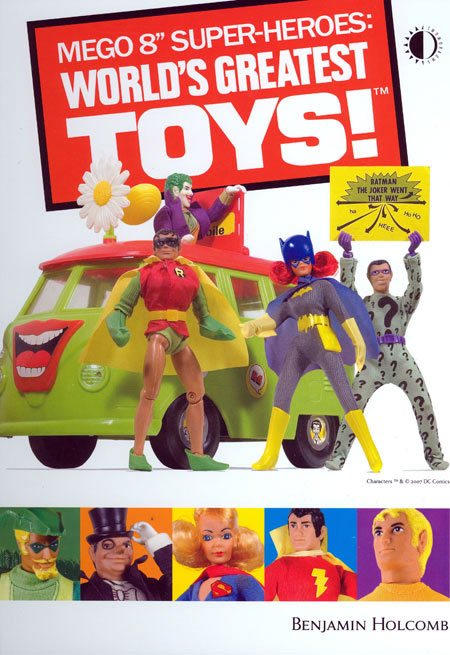
BAB Book Review --Mego 8" Super-Heroes: World's Greatest Toys!


Doug: For Christmas 2010 I finally got a book I'd been after for quite some time -- TwoMorrows' Mego 8" Super-Heroes: World's Greatest Toys! I loved my Megos almost to death when I was a kid. I wouldn't say I'm a collector these days, although I do retain several that I had as a child. So for those of you reading this, whether you are collector or enthusiast, I can't recommend this book enough. Sure, there are fantastic websites about Megos (the Mego Museum comes immediately to mind), but as we've discussed when the subject was comic book reprints, sometimes you just can't beat the feel of a book in your hands, and this one's pretty darn near comprehensive.

This volume is a hardcover with no dustjacket -- it's very sturdy and the colors on the cover are just vibrant. The photography in the book is HD quality -- if you want to see the texture on a particular costume, you can. Paint applications? Ditto. It's abundantly obvious that author Benjamin Holcomb has had a love affair with these dolls (let's be honest -- a Marvel Legend is an "action figure"; these are dolls. And I don't care...). His passion shines through in the images as well as in the background information and the meticulous way in which any and all data relevant to collectors is presented.
The scan above left shows the various styles of arms and legs; if you look at the joints, you'll notice the evolution of technology over the life of the line. And details like that are present throughout the tome.

It's a bit of a history book, too. The history of the Mego company serves as a prologue. There are also explanations for the changing look of the figures as the reader is informed that shifts in petroleum prices often led to the use of different grades of plastics. There are noticeable variations throughout the line, and the above-mentioned photography is perfect in guiding us through these differences even in runs. There's also a wonderful attention to detail for all of the different packaging that at one time surrounded these figures. Even the somewhat plain brown boxes that were used for catalog orders have a certain charm to them -- it's how I got my first Batman with the removable cowl!


Hardcore Mego enthusiasts should be aware that, as the book title suggests, only the World's Greatest Super-Heroes line is covered. While there are mentions of other lines, such as Star Trek, Planet of the Apes, the Wizard of Oz, etc., there is no real space dedicated to discussion of such. I for one would love a companion volume on Mego's other figures.


Enjoy some of the scans I've provided, and the next time you're at your LCS, check to see if you can leaf through this book!

Wednesday, December 22, 2010

BAB Christmas Wish Lists


Karen: Geeks love Christmas, because there are so many awesome goodies out there to put on your Christmas list! Without further ado, Doug and I will present some of the items we hope show up under the Christmas tree:

Karen: I'd like to get this amazing looking book, The Making of Star Wars: The Empire Strikes Back. This is a monster of a book (weighing in at nearly 5 lbs!) that chronicles the making of what many consider to be the best film in the Star Wars series. Packed with original design drawings and on set p
hotos, plus a ton of information, it probably has everything you ever wanted to know about Empire.


Karen: Here's another book I'd like to get, Walt Disney Imagineering: A Behind the Dreams Look at Making the Magic Real. I find Disneyland and Disney World fascinating, and love the stories about how the different attractions were designed and created. The Imagineers are very talented folks. This book looks like it has a wealth of information and a lot of great drawings and photos too.


Karen: My final pick is my unobtainable one: the Alex Ross "Legion of Super-Heroes" print from 1999. Since neither I nor anyone I know has an extra $500 or so sitting around, I'll probably never be able to hang this one up in my sanctum, but boy would I love to have this! It's absolutely beautiful, with all of the Legionnaires flying off into space. The Alex Ross Art folks that tour the convention circuit have sometimes had this art on a gigantic banner over their booths and blown up to gigantic size, it is simply astonishing. There is such detail in the work, but of course that's to be expected of Ross. It's also my era of the Legion, with the characters I hold most fondly, in the costumes I see them wearing in my mind's eye. If you look at the very bottom, you will see that the Legion cruiser is even reflected in Wildfire's visor! What a magnificent print. Sigh.

Doug: Karen, you'll get no argument from me on that Legion print! I've seen the large banner version you mention, while on several forays to the WizardWorld Chicago comicon. It is a breathtaking sight!

Doug: As for my wish list, I actually accomplished (finally) the purchase of a book that's been on my radar since the spring. John Buscema: Michelangelo of Comics from Hermes Press was to have shipped the first week of August; it finally arrived at my LCS on December 15th! I've been reading it, and will write up a BAB Book Review very soon. Interested consumers may want to wait for the review before plunking down their hard-earned cash... And if that cryptic comment doesn't leave you waiting with a small degree of trepidation, I don't know what would!

Doug: As to this year, once again I've put the TwoMorrows tome Mego 8" Super-Heroes - World's Greatest Toys. I've long been fascinated by the Mego line -- truly my favorite toys as a child. All of the accessories, variants, and characters I never had make this book a must-have for me. Who knows? Maybe this will be the year...

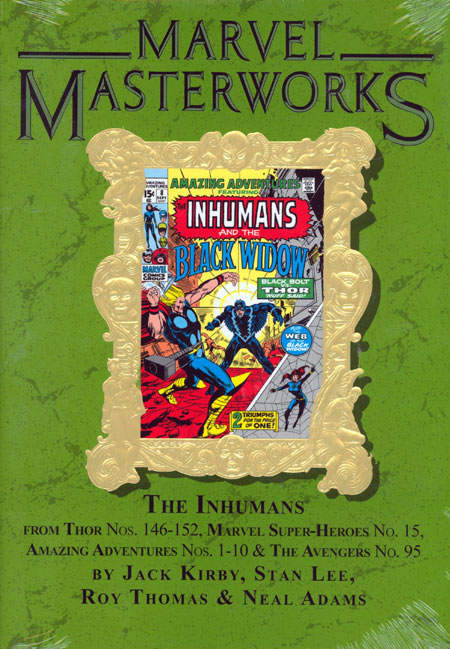
Doug: Next up on my list is the Marvel Masterworks for the Inhumans, Volume I.
This book contains the back-up stories that ran in Thor, the Amazing Adventures series, Medusa's solo appearance in Marvel Super-Heroes, and Avengers 95 (the midst of the "Kree-Skrull War"). The artists contained in this book are a Silver/Bronze Age hall-of-fame in their own right -- Jack Kirby, Gene Colan, and Neal Adams. I only own a smattering of these books, so this would be a welcome addition to my library.

Doug: Lastly, I'd like to get the first box set of ESPN's very fine 30 for 30 series of films. This for the most part has been an outstanding program -- I've not seen all of the films, but the dozen or so that I've been fortunate enough to catch have all been entertaining.
Of note were films about Reggie Miller vs. tje New York Knicks, the Hank Gathers tragedy at Loyola Marymount, the influence of the Los Angeles Raiders on the gangster rap movement that grew out of LA's Compton neighborhood, and the day of the O.J. Simpson "Bronco chase". There are other fine offerings in the series, and I look forward to the second box set collection.

Wednesday, October 20, 2010

BAB Book Review: The Thin Black Line


The Thin Black Line: Perspectives on Vince Colletta - Comics Most Controversial Inker

Doug: After several short sittings, I decided one Friday night (yeah, I'm that exciting...) to take a little plunge and finish the last half of this book. The TwoMorrows publication is authored by Robert L. Bryant, Jr., is 128 pages and retails for $14.95. And it's a page turner.

A couple of years ago, over on the Two Girls... blog, Karen and I participated in a review of
Ronin Ro's Tales to Astonish tell-all about life in the Marvel Bullpen in the 1960's. That book was mainly focused on Jack Kirby. While full of anecdotal dirty laundry, our main complaint about the book was the lack of referencing for all of the information Ro provided. Bryant doesn't allow himself to slip anywhere near those depths of historical irresponsibility in this book. Whether a Colletta apologist or attacker, names are named and attached to every quote in the book. And, as in the case of Marv Wolfman and Jim Shooter, when certain principals chose not to comment we are told that they refused to comment. No, Bryant offers a balanced and attributable list of criticisms (both positive and negative) of those who knew Colletta throughout his career.
Among those creators prominently quoted in this exhaustively researched book are: Stan Lee, Carmine Infantino, Roy Thomas, Mike Grell, Mark Evanier, John Romita, Fred Hembeck, Joe Sinnott, James Sherman, Tony Isabella, Tom DeFalco, Herb Trimpe, Joe Staton, and many others. As I said above, some defend Colletta... but to be honest, most of this is a rip-job, some of the criticisms even sounding angry. There are two main criticisms: Vinnie's propensity to erase and/or ignore the lines that he did ink, and his speed. The latter is ironic, because it's what kept him in the industry when (if it's true) so many pencillers were unhappy with his embellishment. To provide balance to the many complaints, Colletta's son Franklin is often quoted, providing insight to the private Colletta -- family provider, friend to many, and a guy out to make a buck.

Perhaps the two stories that are included that are well-known (I'd heard the first of these claims) about Colletta's career are the oft-told charge that he threatened to throw Roy Thomas out a window of the Marvel offices, and testimony that Colletta could fully ink a page in 30-minutes or less.

I've provided the link to the TwoMorrows preview a couple of times. Rather than scan other pages from the text, I'll give it to you again. This is the entire chapter that covers his inks over Jack Kirby on Thor. Ironically, it's this work that many favor most among all of Colletta's output. It's interesting that John Morrow chose this chapter to provide as a selling point -- it's certainly the most inflammatory, as it showcases numerous examples of Colletta erasing the King's pencils. That being said, it's a sales hook. You should know that the book is a bit more balanced than that.

Here is the table of contents:

Introduction: The Debaters
Chapter 1: The Controversy
Chapter 2: Love, American Style
Chapter 3: Inking Asgard
Chapter 4: Rivets and Trees
Chapter 5: The Fourth World
Chapter 6: The Guy on the Assembly Line
Chapter 7: "You Could Always Use Vinnie"
Appendix: Two Years in the Life
Acknowledgments

The latter two sections make Bryant's book a real winner for me -- to show Vinnie's workload, he provides a synopsis of Colletta's work in two different years (1967 and 1977) and lists the Grand Comics Database as his resource. The acknowledgments section is a sort of bibliography and includes the names of those interviewed, when, and in what format.

Ronin Ro could learn a lot about writing history/biography from Robert Bryant.

Thursday, May 6, 2010

Bronze Age Babies Bulletins


Doug: Quick-hitter today, fans!

I'm sure by now everyone has seen this image of Chris Hemsworth as Thor for the upcoming motion picture. What do you think? I think it looks good! However, in order to really pass as Marvel's version of the God of Thunder, one would have to look good in the helmet. I'm thinking the folks who released this image may have intentionally left the lid off, because let's face it -- there's a lot of "dork potential" in being seen in a silver chapeau with big eagle's wings sticking out of the sides. We shall see...

Iron Man 2 in just one day! Looking forward to it. Feel free to post comments (spoiler warnings where appropriate) either here or in tomorrow's first installment of Demon in a Bottle!


Have you seen any publicity on the new John Buscema hardcover? It's being solicited in the current issue of Previews, and will ship in July. Save up your pennies! I know I'm going to try to get my mitts on the limited edition hardcover. Here is the description, from the May Previews.

This should be a nice companion piece to TwoMorrows' recent Sal Buscema biography. I already have several books on Big John, but am waiting for the definitive biography. Hopefully this is it!


Thursday, December 24, 2009

Our Wish Lists

It's Christmas Eve, kiddies!
Get yourself in bed, and no peeking down the stairs!

Doug: Wouldn't it be cool if, in addition to world peace, I found these things under my tree this Friday?


Sal Buscema: Comics Fast and Furious Artist from TwoMorrows Publishing.

Let's hear some love for Big John's little brother, Sal! If you're a Bronze Age fan, and I'll assume you are since you're here, then Sal's your man. Amazing Spider-Man, Marvel Team-Up, the Incredible Hulk, the Defenders, Peter Parker, the Avengers -- you name it, Sal drew it! Sal's long been due some love for his contributions, and I'd love to read this new retrospective.


Mego 8" Super-Heroes: World's Greatest Toys from TwoMorrows Publishing


I've chronicled a couple of times my love for Megos. I had the chance to thumb through this tome last summer, and will heartily recommend it to any early '70's action figure enthusiasts. This book is very colorful, incredibly detailed -- from what I could tell, all variations in packaging, clothing, head sculpts, etc. are depicted in photos large enough to do justice.


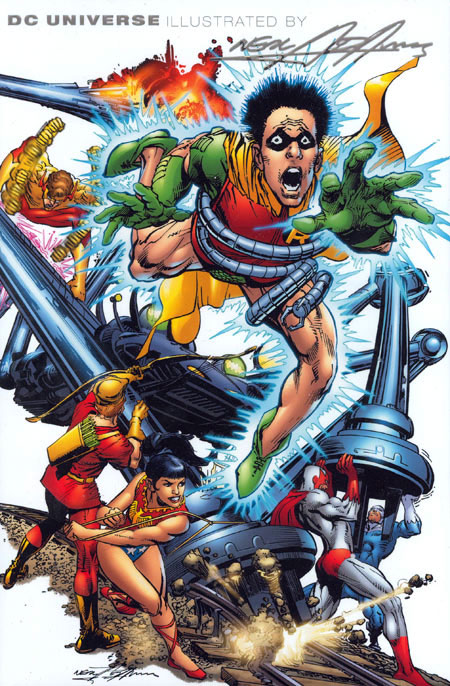
DC Universe Illustrated by Neal Adams


I own the 3-part Batman Illustrated by Neal Adams and am looking forward to this and the coming volume 2. I have Adams' Green Lantern/Green Arrow work collected in two tpb's; I do not have his Deadman volume. Anyone out there want to recommend that? I should say that I've read some reviews of this book and some Adams fans are put out that Neal was allowed to re-ink and re-color some of his work here and it wasn't all that pleasing. I can't comment on that, but thought I should at least state it.


Marvel Comics in the 1960's from TwoMorrows Publishing


The main premise of this book is available online at the Silver Age Marvel Comics Cover Index, but I wanted the book format. My biggest complaint is that the original cover art was much cooler than what shipped. I'm a sucker for comics history, so I'm looking forward to reading this take on Marvel's expansion throughout the Silver Age.


And last but not least, how about the blue and yellow Goliath figure from Hasbro's Marvel Universe line? At 12" tall, he will fit in just fine with my Marvel Legends, and give me a nice survey of the career of Dr. Henry Pym -- I already have the little and 6" size Ant-Man, the Giant-Man build-a-figure, and Yellowjacket. This will be perfect!


Karen: Well, Santa has already left a really big box under our tree this year. I have a sneaking suspicion that a rather large bust or figure might be inside. I'll get back to you after the 25th!
For myself, there's a few things out there I'd really like. Doug, I also would like to get that Sal Buscema book from Twomorrows, and I have the Marvel Comics in the 1960s book, so if you get that one, we can do a review on it! Now as for other presents I'd like to receive, this first one is definitely on its way, as I just ordered it! The Marvel Masterworks series has been moving into the 1970s, and I've already got the Warlock and Captain Marvel editions. I was really excited to see that Deathlok was getting the MM treatment! This volume has ASTONISHING TALES #25-28, 30-36, MARVEL SPOTLIGHT #33, MARVEL TEAM-UP #46, MARVEL TWO-IN-ONE #27, 54 and CAPTAIN AMERICA #286-288 - basically all the Deathlok you need!


One other book I'd like is Keep Watching the Skies by Bill Warren. This is a massive (1040 pages!) book that examines the classic sci fi movies of the 50s and 60s. As this is a period of great interest for me, and the book comes highly recommended, I really hope to get it some time soon. The price is a bit steep but I'm sure it's something I would reference again and again. You never know when you'll need to have info on Invasion of the Saucer-Men at your fingertips!


It would be great to get this boxed set of Ray Harryhausen movies at Christmas - then I could sit back and watch flicks on my days off! This set contains the films 20 Million Miles to Earth, 7th Voyage of Sinbad, It Came from Beneath The Sea, and Earth Vs. The Flying Saucers, all pretty entertaining stuff. But I'm a Harryhausen nut - I can never get enough of seeing his little creations running around!


I hope everybody gets something nice from Santa -and may everyone have a safe, healthy, happy holiday.

Friday, August 28, 2009

Doug says: "Check out some of my Stuff!" Part 4

Hi, kiddies! In this installment we're going to take a gander at some original art! For the ignorant among you (merely on the subject, not in general to be sure!!), original art is just that -- the paper (or "board", as it is sometimes known) on which the penciller and then the inker and the letterer did their craft. This now-work-of-art would then have been used to create a plate that would have color separations assigned and that would eventually become a press plate from which a given comic book would be printed. For more information on this topic, you can check out Grailpages: Original Comic Book Art and the Collectors from the fine folks at TwoMorrows. Now out-of-print, Jerry Weist had written a book back in 1992 titled Original Comic Art: Identification and Price Guide. You can learn more about it here, and perhaps even pick up a used copy for yourself.

Aside from original comic art pages, many collectors like sketches and/or pencil and ink drawings. These are readily available on such online auction sites as eBay; in fact, most of the artifacts I am showing in this post were purchased from sellers in that community.

NOTE: My scanner is not large enough to accommodate an 11x17 sheet of paper -- the standard size of a comic art board. Hence, a few of the pages will be only partially displayed. Also, a couple of my nicer (IE: more valuable) pages have been framed and matted -- I will only show the published pages, as there was no way to adequately show off those pieces.

So -- here ya go -- some "stuff" from my collection!


First up is page 3 from Avengers #76 (1970) with pencils by John Buscema and inks by Tom Palmer. As I mentioned above, the scan only shows you a portion of the page. What is not visible is a heavy black marker line on the upper left side, outside margin -- it does not interfere with the art at all. At this point I'll say that many art collectors like a nice, clean page. While the black line isn't all that attractive, it doesn't take away from the actual page. I also don't mind white-out or visible blue-line pencils. To me, this shows the creative process and lets me use my imagination as to what the creators may have been thinking whilst creating the page. Anyway, this is a nice action page, albeit just among the Avengers in the mansion.


Next up are the two pages that are actually framed in my comic room. Fantastic Four #139, page 25 is by John Buscema and Joe Sinnott -- this one was purchased from Mitch Itkowitz at Graphic Collectibles, who I have dealt with on a few occasions, although not recently; I always felt like Mitch did me right! By the way, Bashful Benjy looks good in black and white! The second page was an eBay purchase and is page 10 from Avengers #34 with pencils and inks by Don Heck. I just love the large panel with Goliath, and although the page is chock full of word balloons (imagine that!), it's still a nice presentation. And there's a little blue line and some white-out!


On several occasions I had the wonderful opportunity to chat with Jeffrey Moy and WC Carani at the Chicago Comicon (as it was then known). They were the artistic team on Legionnaires and drew those cute little figures -- they were kind enough to give me an 11x17 lithograph of the Legion characters each time we visited. I have two pages from them (I had a third, but sold it to make some money so that I could buy other things), and have included one of my favorite panels -- this is from Legionnaires #61, page 5 and was from a storyline that featured Superboy -- post-Crisis, so it was a treat as there was no Superboy at that time! If you put your face right on the monitor, you might see on the left margin that both guys signed the page to me.


I have a nice collection of pencil roughs for comic pages, mostly by John Buscema. If you haven't figured it out yet, he's my main man! I just love his work, whether on super-heroes or Conan. To your left is a sketch that is a rough for the cover of a European convention program. Even on my copy the top is cut off -- if you've ever seen the finished product, Conan is holding an umbrella and is sitting on a rock while rain pours on him. I had always assumed he had some type of Asian sword over his head, until I saw the entire artwork.

I really like the next exhibit, which I bought from an eBay dealer. Scott Shaw! is a comics artist, and I thought it was cool when I learned that he is also the advertising artist for Post Cereals Fruity and Cocoa Pebbles -- featuring the Flintstones. This is a really fun piece, showcasing Fred and Barney as Batman and Robin. I haven't framed this, but intend to at some point.


The last piece is pretty special, as it's a caricature of me drawn by a former student of mine. Mike Babinski is finally, after years and years of trying, published. He's been inking over Don Kramer's pencils on the DC 6-issue mini-series JSA vs. Kobra. This is a sketch Mike did for a school project back in 1992, my third year of teaching and his freshman year of high school!!


Tune back in next time for more Stuff!
Related Posts with Thumbnails