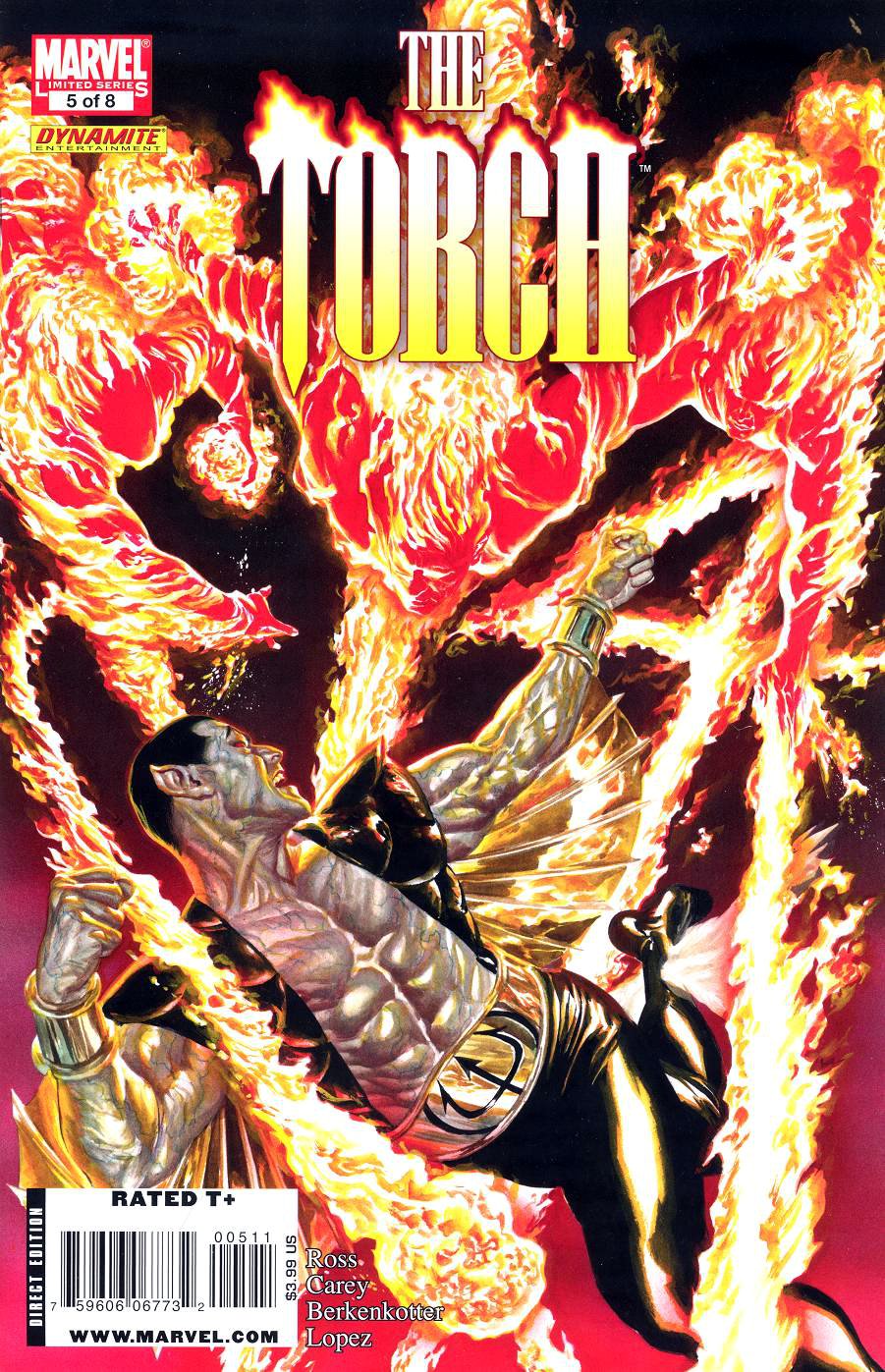
The Torch - collects The Torch #s 1-8 (2010)(covers by Alex Ross)
Alex Ross/Mike Carey/Jim Krueger-Patrick Berkenkotter
Doug: If you're like me, you occasionally wile away some time searching the graphic novels and trade collections on sites like Amazon.com. A couple of years ago I stumbled across a trade that collected a series that piqued my interest. I saw this before I'd agreed to surrender my principles and embrace the Brubaker/Epting Captain America material. Going back to the Bronze Age, I've always been an Original Human Torch fan. Despite the art, I generally liked the Invaders mag, and got a big kick out of the Torch's role in the "Celestial Madonna" arc in the Avengers. I'll admit it -- despite what John Byrne did to the Vision in the pages of West Coast Avengers, I was excited for the return of the Torch. And unlike Gwen Stacy or James Buchanan Barnes, the Torch's revival was one that made sense. Well, made sense if he wasn't the Vision... Thank goodness for the sensibilities of Kurt Busiek's Avengers Forever in helping us get through the trauma. Anyway, to bring my mind back, on Easter Sunday I was in Indiana visiting our younger son. Before I left town to come back home, I'd noticed that the LCS was actually open. Since the proprietor always has a killer selection of trades/hardcovers at half off MSRP, I stopped in. Success! I scored the second volume hardcover of the Spider-Man newspaper strips, the tpb for "Batman: Year Two", and today's subject. All for $32. Happy Easter, indeed.
Doug: How about some background on this project, from Newsarama.com --


Alex Ross will team with writer Mike Carey for a Human Torch limited series which will return this Golden Age hero to prominence in the modern Marvel Universe. (NOTE: I'd argue that it's Tom Raymond, Toro, who is actually the protagonist of this story. -Doug)Doug: Let me just add an editorial comment that aside from my acceptance of the returns of Bucky Barnes, the Original Human Torch, and Toro (we'll get to that in a minute), I cannot abide the fact that Norman Osborn again exists in the flesh. I know... hypocrite. Sue me.
According to Marvel and Dynamite, Ross conceived of the series, and will be co-plotting with Carey and providing covers. The eight-issue miniseries is slated to begin in September (2009). An interior artist was not named.
The miniseries, which will be packaged by Dynamite Entertainment (like the soon-to-conclude Avengers/Invaders limited series), is part of Marvel’s year-long 70th anniversary celebration. It’s only fitting for the original Torch to get a spotlight, as the character first appeared in 1939’s Marvel Comics #1, as an android created by Dr. Phineas Horton.
Ross’ path has intersected with that of the Torch in a couple of notable projects over the course of his career, first off, teamed with Kurt Busiek in Marvels #0, where the Torch narrated his own creation and origin in a haunting tale; and more recently, in the above-mentioned Avengers/Invaders, where the original Marvel hero (along with his sidekick Toro) found himself in the modern Marvel Universe, along with other members of the original Invaders.
In the modern Marvel Universe, the original Human Torch (who took on the name “Jim Hammond” after returning to the modern era in the pages of West Coast Avengers) is “dead” – well, as dead as an android can be, having exploded while saving his teammates in New Invaders. Aside from his appearance in Avengers/Invaders, one of the Torch’s last appearances was as a memorial statue at The Initiative’s Camp Hammond, with the inscription: JIM HAMMOND, THE FIRST OF THE MARVELS: He showed us that heroes can be made. In Avengers: The Initiative #23, the statue was torn down by a mob after SHIELD and Tony Stark fell from grace, and Norman Osborn took over the camp (Accessed 30 March 2016).

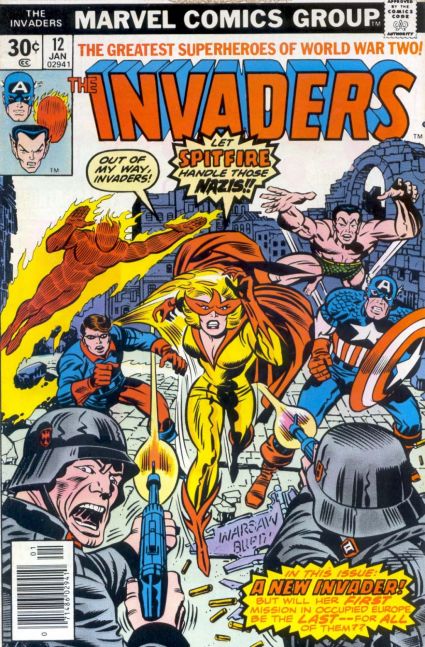
Doug: The last appearance of Toro before the events of the Avengers/Invaders limited series was way back in 1969 in the pages of Sub-Mariner #14 and was presented by Roy Thomas, Marie Severin, and Mike Esposito. Here's the gist of that tale, in (you guessed it) a 100-Word Review:
Toro, to the best information I could find, did not appear in any story that was not set in or referencing World War II until the revival of the Original Human Torch in 1989. From there, and it's difficult for me to testify as I didn't read any of the books that allegedly feature the character, Toro appeared or was at least referenced somewhat regularly. Then (and I'll let some fan from Wikipedia report):Namor emerges from the Pacific Ocean, only to be attacked by the Original Human Torch. The Torch is under the control of the Mad Thinker, which Namor quickly deduces. We find that the Thinker is allied with the Puppet Master and Egghead in a bid to conquer the world by negating all mechanical and electrical apparatus. The Torch frees himself from the Thinker’s control, but in an effort to foil the master plan, we find that the Torch is really Toro, brainwashed to think he was the Torch. The Thinker tries to kill Namor, but Toro gives the ultimate sacrifice.
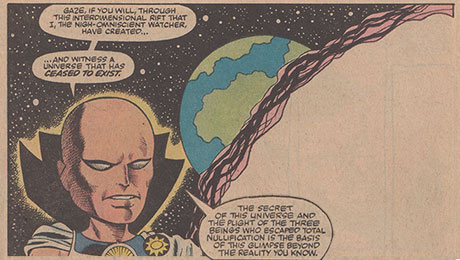
Toro appears in the Avengers/Invaders maxi-series alongside his fellow Invaders when an incident takes them from the battlefields of WWII to the present Marvel Universe, where they encounter both the New Avengers and Mighty Avengers and the Thunderbolts.[4] An examination of him by S.H.I.E.L.D. agents reveals that Toro is a mutant. In Avengers/Invaders #12, Toro was revived from the dead by the Cosmic Cube thanks to a wish made by James "Bucky" Barnes, and met as he rises from his grave by the Golden Age Vision. Bucky was careful to manage the wish so Toro's revival does not upset the time stream, Toro only coming to life after the Invaders have returned to the past. Toro is the same age he was when he died.[5]And then someone had to go and do this (also from Wikipedia):
Following the Infinity story, when Terrigen Mists were scattered around the world, Toro was subjected to Terrigenesis and engulfed in a cocoon. Being unknowingly an Inhuman descendant, Toro was now theorized that his powers had been the consequence of his recessive Inhuman genes.[9]What the?!? Oh boy... I'm gonna leave that lay right there.


Doug: The Mad Thinker is the villain in The Torch mini-series, and I have to say this is one of those times where a writer catches lightning in a bottle. Called simply the Thinker (no "Mad", and no Awesome Android here), Alex Ross and Mike Carey chose to drop the "X will happen in 3.57 seconds" schtick and make him a truly formidable adversary. I felt when I was reading this story that the Thinker was a major player -- that he could actually pull off his scheme. His personality was perfect -- over-intelligent, haughty, rude, and overall malevolent. Obviously the character had a history with both the Original Human Torch (FF Annual #4) and Toro (see above), and this sort of forms a third and final act if you will. Yes... I think viewed through that lens it makes a really nice triptych of stories.
Doug: Here's the basic plot of the story --
- The Thinker is hired by AIM to create a WMD -- a big WMD.
- Tom Raymond, Toro, shepherded by the Golden Age Vision in a sort of Spectre role, thinks revival sucks -- especially when he sees his wife Ann with a new husband.
- Toro decides the only thing worth doing would be killing the man who killed him -- the Thinker. But after the Vision spirits him to the Thinker's lab, Toro finds that his flame is immediately spent.
- Toro is captured by the Thinker and "examined" -- tissue is extracted from various parts of his anatomy. The Thinker determines that Toro was exposed to "Horton cells" -- carbon/polymer strands of artificial "DNA" that Phineas Horton used in the creation of the Human Torch. This is a breakthrough for the Thinker's WMD creation.
- The Thinker has the Torch's body exhumed from Arlington National Cemetery. He begins to cultivate the Horton cells he has isolated and restore the damages to the Torch's body.
- Toro learns that his mother was not an office assistant as he had known, but had worked closely with Phineas Horton in the years prior to the creation of the Torch. It is possible that the Horton cells were introduced to Tom's physiognomy by his mother's contact with the cells.We also learn that Toro's X-gene only gave him an immunity to fire; it was actual contact with the Torch that allowed Tom Raymond to ignite and become a flaming youth (KISS reference there, you know).
- In a scene ripped from your favorite Frankenstein flick, the Thinker re-animates the Torch by positioning his body high in the sky, suspended from a metal post in the middle of a lightning storm. The Torch comes back to life, but has no mind of his own.
- Using Compound D, his own variation on the Horton cells, the Thinker subverts the Torch's will and forces him to be his WMD, first ordering the Torch to attack and destroy a Scandinavian ship, and then later a gas main running beneath a village in Estonia. Both missions are successful, with property destruction and loss of life.
- With the Torch reactivated, Toro's control of his own flame returns. The two torches indeed share a symbiotic relationship, as the Thinker hypothesized.
- But what the Thinker had not counted was that the Torch's humanity derives from existing in the presence of human cells, human DNA -- specifically Tom Raymond's cells. The Torch's mind returned...


Doug: I don't want to give anything else away, because I'd really like to encourage you to seek out this trade or the actual comics. The outline above covers most of the first three issues. If you are like Karen and I and felt that Brubaker's Winter Soldier epic was well handled, then you are going to enjoy this story. I thought the characters were handled with a reverence, such that the creators had a story to tell that involved the present. That these dead creatures should be resurrected was handled in a manner that did not require me to suspend my disbelief past what I'd usually expect. The comic book science was "sold" to me in a straightforward way, and I never doubted for an instant that in the Marvel Universe these things could happen. And let's face it -- anything involving the Cosmic Cube (used to resurrect Toro) is basically magic anyway.
Doug: The eight issues go on to include the Sub-Mariner and some Atlanteans, the Fantastic Four (there's a great team-up where we actually get to see three Torches in action!), Nazis, and a setting in the last few issues that echoes Edgar Rice Burroughs. Tour. de. Force.
Doug: Lastly, I've included below some samples of the interior art. Whenever I see that Alex Ross is doing covers for a project, I immediately want to see the interiors to see if they are up to the standards of the outer package. In this case I think you'll find that Patrick Berkenkotter is every bit as able to handle these characters as Steve Epting was to show us Bucky's return. Like I did when I first sat down to read the Captain America: Winter Soldier collection, I read this baby cover-to-cover in one sitting. It was a page turner, and I felt satisfied when I got to the end of it. It was just as much fun on the re-read for the writing of this review. Go ye forth, then, and seek! Find this tome! And then let me know if you also had a good time.