Showing posts with label Mike Esposito. Show all posts

Saturday, July 30, 2016

Guest Review - "Only a Mutant Like Ourselves Could Have Destroyed the Hulk!" What If? 31


Doug: Once again we welcome Thomas F. to the scribe's chair. Today he's sharing thoughts on a magazine that was a late-Bronze Age staple for many of us - What If? And lurking within the issue Thomas has chosen is a question stemming from the early 1970s -- What if Wolverine had killed the Hulk? Why wait? Read on!


What If? #31 (February 1982)

“What If Wolverine Had Killed the Hulk?”

Rich Margopoulos-Bob Budiansky/Mike Esposito/Bob Sharen

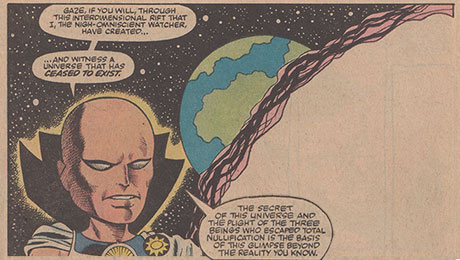
Thomas F.: The “What If” comics were an intriguing concept: as fans are aware, they presented hypothetical tales of an alternate reality. Usually based on a significant event in the Marvel Universe, they tried to show the direction history would have taken if things had unfolded differently—sometimes very differently. Some of the stories have unsettling and tragic outcomes, which will make the reader feel relieved that they are just imaginary. The narrator of the story is, as usual, the Watcher.

This invented tale features Wolverine. But in these early times, little was known about Wolverine. Still, a few facts were established:

(1) Wolverine, aka Logan, had been a Canadian field agent employed by the Canadian military;

(2) Wolverine was a mutant with an incredible healing factor;

(3) Wolverine had a skeleton constructed of adamantium, a virtually unbreakable metal;

(4) Wolverine had three razor-sharp, retractable claws on the back of each hand, which he used as offensive weapons;

(5) Wolverine had an extremely powerful sense of smell; and

(6) Wolverine possessed the savage instincts of an animalistic killer and had undergone drug therapy and “psycho-training” to curb these wild impulses of his.

  
BACKGROUND: To evade the American military, the Hulk made his way into Canada and fought a giant, Yeti-like cannibal beast in the woods of Quebec known as the Wendigo. Alerted to the ferocious creatures destroying the forest in the Canadian North Woods, the Canadian Armed Forces sent a special adamantium-clawed field agent with a six-hour deadline to capture the Hulk. Wolverine proved unsuccessful—he was unable to defeat the Hulk in combat, and the Canadian military intervened, sending a “crack-squad of specially-trained commandos” to finish the job. They use a soporific gas against the Hulk, which worked, but when the Green Goliath awakened, he easily broke free and escaped. (These incidents took place in The Incredible Hulk #s180-182, before the events of Giant-Size X-Men #1, where Wolverine abruptly resigned his Canadian commission and left with Professor X to join the new X-Men, who were introduced in X-Men #94).

 
300-WORD SYNOPSIS: This time around, Wolverine first incapacitates the Wendigo, then engages the Hulk in a fight to the finish. No quarter is given. Wolverine pits his tenacity, speed, and “diamond-hard” adamantium claws against the overwhelming strength of the Hulk. Caught up in the escalating intensity of the clash, Wolverine disregards the instructions of his superiors to apprehend the Hulk and decides to kill him instead. In a savage spate of fury, Wolverine repeatedly slashes away at the Hulk’s neck and succeeds in killing him.


Later, after a barroom brawl during which he loses control of himself, Wolverine is charged with murdering a civilian, and he deserts the Canadian Forces. Almost immediately afterward, Wolverine—now out of options and pursued by the law—is enlisted into the Brotherhood of Evil Mutants by the powerful Magneto, Master of Magnetism. Magneto tasks Wolverine with infiltrating the X-Men as a mole.

Over several weeks, Wolverine becomes a trusted member of the X-Men, training with the team in the Danger Room and helping to defeat the Sentinels. Wolverine is still committed to betray the X-Men for Magneto, although he does so with a troubled conscience, because he now considers the X-Men his friends. According to a prearranged plan, Wolverine disables Cerebro’s “proximity fuse,” which allows Magneto and his followers to break into X-Men headquarters without warning.


When Magneto and his mutant cronies—the Blob, Unus the Untouchable, Lorelei, and Mastermind—breach Professor Xavier’s School For Gifted Youngsters, they overwhelm the X-Men. But when Magneto tries to kill Jean Grey/Marvel Girl, for whom Wolverine feels affection, Wolverine turns on Magneto. Both inflict lethal injuries on one another: Wolverine slashes Magneto to death, and in his final moments, Magneto uses the power of magnetism to cause Wolverine to pierce himself in the throat with his own metal claws.
Before reading this issue, I’d never heard of Rich Margopoulos. After looking him up, I discovered that he’d written for Warren Publishing, which produced the monster/horror comics Hunter the Demon Killer and Vampirella. Margopoulos also wrote over at MLJ, now known as Archie Comics, and wrote at least one more What If? story for Marvel (issue #38). His influences were Steve Englehart and Roy Thomas.

As for Bob Budiansky’s artwork, it’s average, in my opinion. Passable, but not extraordinary, though he is a good storyteller. Certainly not a big name, Budiansky is best known for writing The Transformers and penciling issues of Ghost Rider near the end of its run. Personally, I would have liked to see Herb Trimpe pencil this issue.


I thought I’d mention that as a Canadian myself, I have an affinity for heroes of Canadian origin, and appreciate it whenever Marvel or DC create Canadian characters, even if they’re almost invariably depicted as British replicas.


I love the scenes where Wolverine does the Hulk in. Wolverine’s relentless viciousness really makes an impact here.
Although it wasn’t known at the time of The Incredible Hulk #181, it was established years later that Wolverine’s metal claws did lacerate the Hulk’s tough skin, but the Hulk healed so quickly that he appeared to be uninjured.


The Hulk’s passing made a personal impact on at least two people, General “Thunderbolt” Ross and his daughter Betty. The general has mixed feelings of part relief and part regret now that his long-time nemesis has perished. As for Betty, she is immensely saddened because although she was certainly aware that the Hulk was very dangerous, she loved Bruce Banner, the man inside the monster. The rest of the world is understandably astounded to when they hear of the Hulk’s death on a news broadcast.

I found it neat how the Brotherhood of Evil Mutants, led by Magneto, have their version of a “Danger Room” at their headquarters where they train, just like the X-Men do. Supervillains have to keep in shape too!
Wolverine’s tendency to succumb to a berserk rage is an appealing quirk of his. Unfortunately for him, this time it led to tragedy—when a barfly pulled a gun on him, Wolverine acted instinctively and skewered him like a shish-kebab.


This also happened after Magneto tried to kill Jean Grey—Wolverine flew into a rage and butchered him.
 
The final page where the dying Magneto managed to summon enough power to carry out a final offensive, killing Wolverine, is shocking. Like some movies, the actually impalement occurred off-screen (in this case, off-panel).
 
Overall, this was an intriguing issue that I was glad to finally get my hands on. Just wish that “bigger” names had been involved in the production of this series, though Frank Miller did write and pencil two excellent What If? Daredevil stories: What If? #28 (“Matt Murdock … Agent of S.H.I.E.L.D.”) and What If? #35 (“What If Bullseye had Not killed Elektra?”). If you’re a Daredevil and/or Miller fan, be sure to check those out.


Thursday, January 28, 2016

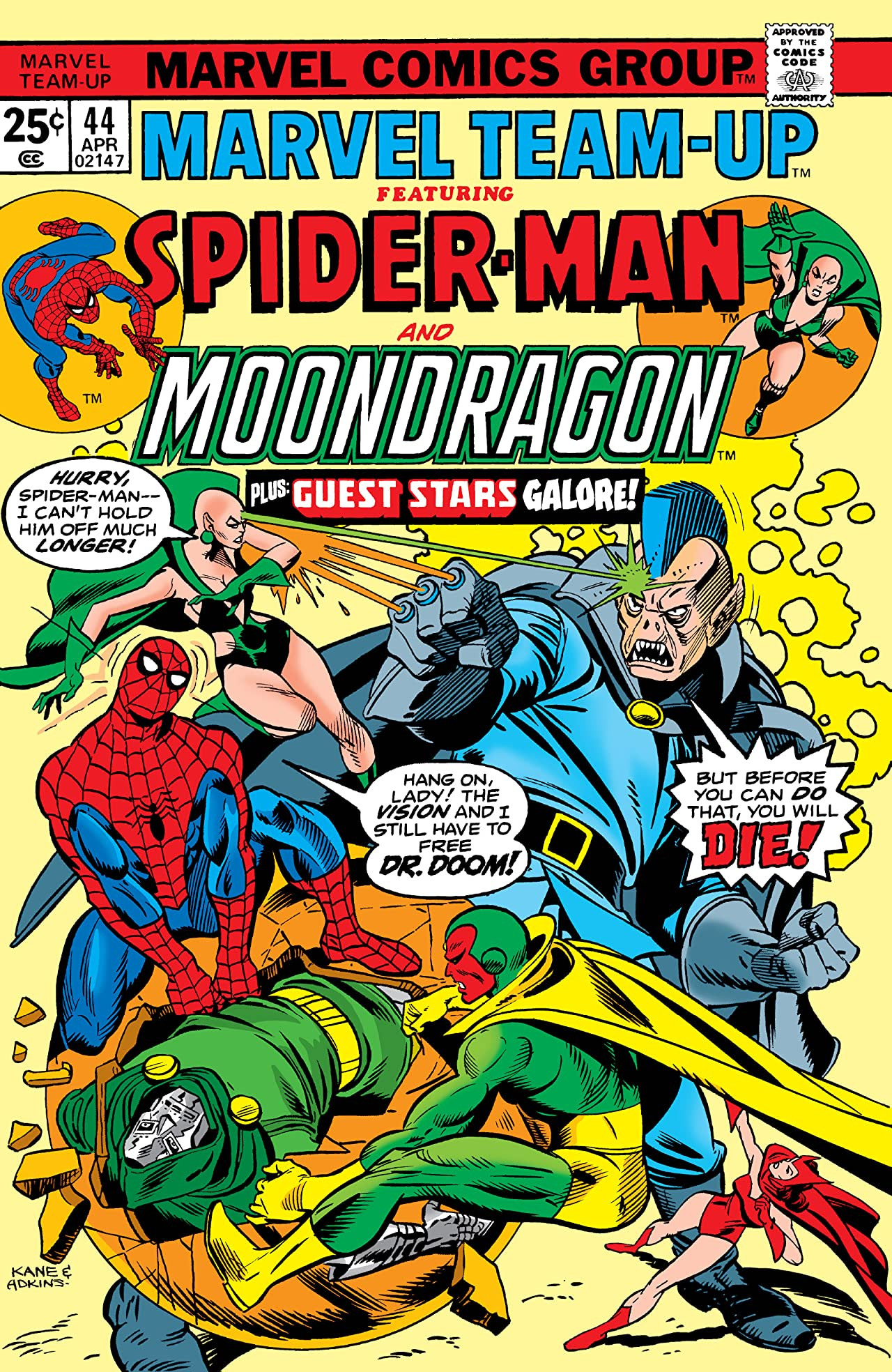
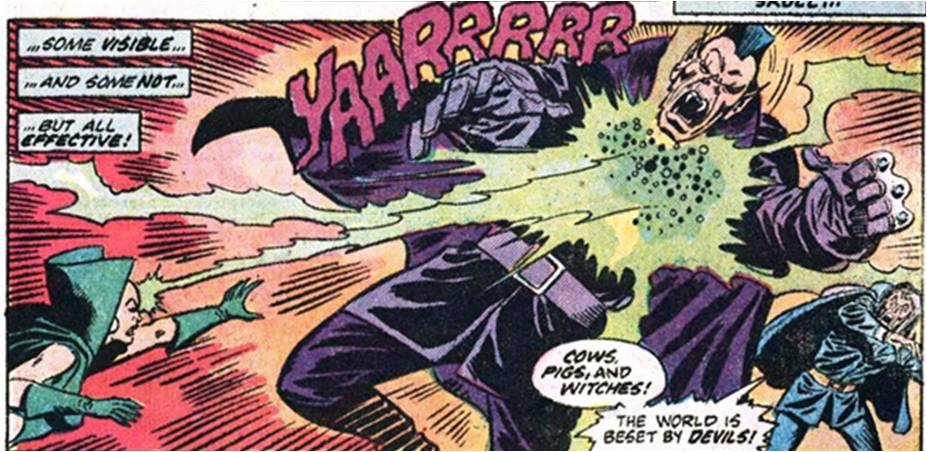
BAB Classic: "Cows, Pigs, and Witches! The World is Beset by Devils!" Marvel Team-Up 44


This post was originally published on 12 April 2010.

  Marvel Team-Up 44 (April 1976)
"Death in the Year Before Yesterday!"
Bill Mantlo-Sal Buscema/Mike Esposito

Doug: Last chapter, folks... and I'm sorry to say I'm sort of glad. As Karen and I discussed off-site, this little story started out promising -- Spidey, time travel, lots of Avengers, Doc Doom -- should have been good stuff. And while I have fond memories of this as a kid, it is perhaps one story that hasn't held up over time. I think it suffers, maybe even as some superhero movies do these days, of too many characters cavorting around in what became a big mess of a plot. But we'll put a smile on and trudge through.

Karen: Indeed, every so often we come across these books - ones which were far more interesting in our memories than in reality! But let's finish it up.

Doug: We begin on the roof of Avengers Mansion. Moondragon is distracted by her thoughts as Iron Man approaches. I have to say, I really hated Moondragon when I was a kid. This issue of MTU was on the stands the same month as Avengers #146, and of course that was the fill-ins that ran in the middle of the Serpent Crown Affair. If you recall, that was the arc when Moondragon tried to convince Thor that he was above his fellow Assemblers. And what's more, she basically declared herself his equal. Man, I hated that woman.

Karen: I don't think you were alone. I didn't like her either. But of course, I believe that was Steve Englehart's intention when he thrust her on the Avengers. She was that rock in one's shoe, always causing some irritation.

Doug: "Rock in one's shoe" is a great way to put it! So Moondragon succumbs to the same hex bolt that had uprooted Spider-Man back in MTU #41 and is lifted into the timestream, to emerge back in 1692 to find our heroes bound on some gizmo. The Dark Rider is present (still a giant), as is Cotton Mather. The Rider commissions Mather to plunge the Soul Blade into our heroes, which will commence the transfer of their powers/energies to the Rider. Mather hesitates, and that's when Moondragon enters the fray.


Doug: Moondragon zaps the Rider with a mindblast, stunning him. Spidey, Vision, and Wanda awaken to see these new developments, and Doom stuck in some bubble doo-hickey. Spidey and the Vision leap into action to free Doom. While they free ol' Vic, the Rider reverses the mindflow back at Moondragon, who now has to see his origin.

Karen: I thought that was a really strange two page spread, where the heroes are on some altar and Doom is inside a bubble, all very magicky, but the Rider has these mechanical-looking cables coming out of his glove, linking the bubble and altar.

Doug: What was even stranger was the scene where Spidey and the Vision free Doom -- instead of being solid, the bubble peeled back like a... well, like a bubble -- pliable, not solid.

Doug: But wait, there's more! We get to see the Rider's origin as well, and it's... well, to be honest, sort of bland. Wizards, and blah, blah, blah. OK, I've about had enough. This story couldn't get over fast enough. I think, sticking to Bronze Age baddies, that we'd see this sort of thing again shortly with the Sphinx (in the pages of The Man Called Nova and later the Fantastic Four). He was much more interesting with a similar backstory. But, in case you wondered, the good guys gang up on the Rider and eventually Moondragon turns the tide and they blast him out of existence. The story does end on a touching note, as Spidey arrives just too late to save his Puritan friends. I guess I'd forgotten the last scene of the hanging -- while only the victims' feet are shown, it is a bit disturbing.

Karen: Man, you're not kidding. After grinding our way through all the hokum with the Rider, that last page is like a punch to the gut. I'm glad we're done with this one.

Doug: Agreed. This one probably could have been done in 3 1/2 issues, with a lot of the chaff left out. To be honest, some of the Witch Trials scenes became laborious to get through, but it might have been better, more emotional had the scene to the right been set up a bit better. On the one hand we got some really good Sal Buscema art, but on the other we got a Bill Mantlo who seemed to wander the longer this story went on.

Monday, January 25, 2016

BAB Classic: "Before the Awesome Power of the Dark Rider!" Marvel Team-Up 43


This post was originally published on 7 April 2010.


Marvel Team-Up 43 (March 1976)"A Past Gone Mad!"Bill Mantlo-Sal Buscema/Mike Esposito

Doug: Face Front, Marvelites -- it's the penultimate chapter to our little tour through Salem, Mass., circa 1692. When we left off, Doom had arrived on the scene in all his pomposity to face the Dark Rider. Mather falls apart, claiming allegiance to this new "angel of light". While the Dark Rider offers Mather to Doom, Doom backhands ol' Cotton, sending him reeling back toward Spidey and the Vision. It's obvious a face-off is coming!

Karen: I thought it was quite some hyperbole for Doom to say to the Rider that "It was your power that drew me here...power such as even Doom has never known!" considering that Doom had once stolen the power cosmic of the Silver Surfer! But I love the way Sal drew that backhand -whoosh!!

Doug: The Dark Rider reveals that his only interest in Doom and the others of his time is their knowledge of magic. As Spidey and the Vision now move in, the Rider unleashes a cat that had been perched on his shoulder. The cat, like the raven in the previous issue, begins to grow, posing a formidible opponent for our heroes. This scene is a nice two-page spread, where the Rider tells Doom his own origin -- it's a nice recap of the origin tale from way back in FF Annual #2.

Karen: A giant cat. Spidey and the Vision have fought aliens, robots, monsters....yet they are in trouble facing a giant kitty cat. Oh please.

Doug: The bad kitty gets whacked, but by whom? Ah, yes -- the Scarlet Witch has arrived, weakened as she is from her ordeals of the past two issues. Apparently the jig is up (or something), because all of a sudden the Dark Rider flips off his lid, revealing a quite curious look. First off, he sports a Mohawk hair-do. Next, he has shriveled lips like he doesn't have his dentures in, yet has teeth that have been filed to a point (think Dee Snider of Twisted Sister). Lastly, he grows. Really big, he grows.

Karen: This guy reminds me of Necrodamus from Defenders #1, also drawn by Sal.

Doug: Scripter Bill Mantlo cuts us away to a courtroom in Salem, as John Proctor meets his fate. Two pages are devoted to more of the Witch Trials, with the young girls frothing at the mouth and proclaiming "They be witches!" and stuff like that. Even the judge is called out.

Karen: The court room scene, as well as the Salem history lesson in the previous issue, seem over-long. Not all of us are fascinated by this particular point in history the way Mantlo seemed to be!

Doug: Back to the battle, Doom utters one of the greatest lines of his career: "Back! Back, you damnable leech!" Awesome. That is something the Doc would say. Great characterization by Mantlo.

Karen: Yes, Doom constantly referring to himself in the third person was a fitting tribute to his ego.

Doug: During all of this, Wanda is for the most part useless. Spidey and the Vision, as well as Doom, are out-classed. The issue ends with a triumphant, gigantic Dark Rider holding the defeated Doom in his hand as Kong once held Fay Wray. But be optimistic, O Keeper of the Flame -- this yarn's "To Be Continued"!

Thursday, January 21, 2016

BAB Classic: "Aye, They Be Witches!" Marvel Team-Up 42


This post was originally published on 31 March 2010.


Marvel Team-Up 42 (February 1976)
"Visions of Hate!"
Bill Mantlo-Sal Buscema/Mike Esposito


Doug: Here we go -- part 2 of our four-parter set in Salem, Mass. Salem, Mass. in 1692, that is! We pick it up right where our tale finished, with Spidey, Wanda, and the Vision in the heart of a witch-hunting mob led by a crazed Cotton Mather.

Doug: The mob starts to get nasty, hitting the Vision in the face with a stone. Wanda unleashes a hex against the assailant, in the form of a swarm of locusts. Can there be any doubt now that she (and her companions, too) is a witch? The Vision going intangible and then immediately hard-as-a-diamond doesn't help matters, although it does preserve our heroes lives for a short time. However, Wanda is eventually grazed by a bullet, Spidey is overwhelmed by numbers, and the Vision is knocked out of commission by a power burst from Mather's cross.

Karen:Okay, I really have got to protest how easily Spidey went down to this mob of yahoos. This is a guy who has fought the Lizard, the Rhino, heck, even the Hulk, yet he gets knocked out by a bunch of pitchfork-wielding nuts? This was a case of Mr. Mantlo doing something for his convenience as a writer, not because it actually made sense in the story.


Doug: I'd have to agree with you after you cite those super-baddies. It was contrived, wasn't it?
Doug: When Spidey awakens, he finds himself shackled by the wrists and in a jail cell with other townsfolk. Wanda and the Vision are shackled across the room from him. He has a benefactor in John Proctor, who gives Spidey a lengthy discourse on the goings on in Salem over the past year which have brought them to this point. It's a tale of voodoo, witchcraft, false accuasations, and unfair/unquestioning justice. Spider-Man soon bursts his bounds, frees the Vision, and it's off they go to find out just what the heck is going on.

Karen: So... can we safely say that Bill Mantlo had probably done some reading about the Salem Witch incidents and was fascinated by them? Because we get a heaping three pages of history right in the middle of this story! This really seemed excessive to me.

Doug: I agree with you, as an adult. But, as a child of 10, I thought it added some necessary layers to the story. Let's face it -- you just don't get stuff like that in the 4th grade. Shoot, we were probably still making Pilgrim hats and construction paper Indian headdresses at that point!!


Doug: Spying a bright light in the distance, our two heroes go to investigate. Sneaking over, they see Cotton Mather in conversation with a dark figure atop a black horse, and holding a raven. The man in black identifies himself as the Dark-Rider. The Vision, seeing Mather as the man who hurt Wanda, lashes out at him. The Rider looses his raven against Spidey, and as the Wall-Crawler moves against it, it begins to grow. An eye-blast from the Vision kills it, and it reverts to its original size. As the Rider confronts Spider-Man, the scene is interupted by a new voice -- a voice that belongs to Dr. Doom!

Karen: The Vision seemed a little too emotional here, attacking Mather rather than waiting to find out more details about what's going on. Still, considering that Wanda was injured I can let that one go. The Dark Rider's reference to "people of this time" is a definite clue that he himself is not of that time period. The plot thickens. The appearance of Doom at the end was appropriately dramatic.


Doug: Yeah, you're right. I did a quick re-read on that balloon -- I guess I'd originally glossed over it thinking the Rider was referring to the colonists. But no, Spidey clearly says that "people of this time" means he and Vizh. Spoiling our next post on this story, did you notice in one panel where the Rider's face is partially shown that he has red hair? He sure doesn't look like that in the next two issues.

Doug: Mantlo has crafted a really fun story. The historical setting lends itself to a backdrop of adventure, the characters are fun, and each issue so far has had enough twists and surprise endings to keep the reader on the edge of his/her seat. I'm looking forward to the next issue!

Monday, January 18, 2016

BAB Classic: "That Cross-Wielding Fanatic Almost Killed Me" Marvel Team-Up 41


This post was originally published on 29 March 2010.


Marvel Team-Up 41 (January 1976)
"A Witch in Time!"
Bill Mantlo-Sal Buscema/Mike Esposito

Doug: For our next story examination, we're going back to the States' Bicentennial year for a four-parter out of the pages of Marvel Team-Up. This should be fun -- Spidey, the Scarlet Witch, the Vision, Doc Doom, Moondragon, and some Puritan wackos from the Salem Witch Trials. So, how about we dig in?

Doug: This one starts off a little spookily. Wanda is roaming around a dark, dank castle, apparently under the influence of some voices in her head. She tells that her troubles began back at Avengers Mansion, when she felt compelled to commandeer a quinjet and fly off to Europe -- specifically to Castle Doom in Latveria!

Karen: That castle made me smile - it could have been taken right out of an old Frankenstein movie!

Doug: That is exactly what I thought! I was reliving memories from my childhood spent watching the Universal Monsters movies!

Doug: Once in the castle, Wanda is drawn to the room that housed Dr. Doom's time platform. Rounding the corner, she is shocked at what greets her and raises her hands to get off a hex. The last we see of her shows her crumpled on the floor, and some very mysterious Pilgrim-looking feet standing over her.

Karen: This issue is another one which illustrates why there's always been confusion over what Wanda's power really is. She uses her 'hex power' for simple explosive blasts, and as a means of teleporting someone - and I'm sure we'll see even more variety over the following issues. Generally speaking, her power did whatever was needed for the plot to work!

Doug: Agreed. I am still not comfortable in calling Wanda's powers "magic", in spite of her training with Agatha Harkness. Anyway, that hex was a cry for help, rocketing back to New York. And, as fate would have it, who would be in the way of the big pink bolt but our friendly neighborhood Spider-Man! In spite of his efforts and protestations, he's drawn into it, to reappear beside Wanda in Doom's castle at the feet of Cotton Mather!


Doug: Mather busts on Spidey with bolts from a wooden cross, and implores Wanda to bust on him, too. She is conflicted as she battles against his control, but complies. She first blasts the floor below Spider-Man, dropping him into a hole, and then fires at the ceiling -- burying him beneath a mountain of rubble. Mather then operates the time platform, sending he and the Scarlet Witch back to 1692!

Karen: I always liked the way Doom's time platform worked - it just glides down over the user's body and they disappear. It seems more magical than technological, which I suppose works with Doom's background.

Doug: Yep, the time platform goes all the way back to the good Doctor's first appearance, in Fantastic Four #5! I checked it out, just to refresh my memory -- the first time it's used (to send the FF back in time to get Blackbeard the Pirate's treasure) the FF sort of just "zap" out of the present, but while back in time, they do pass through the platform, much as our pal Sal draws it here!

Doug: Bill Mantlo's words are solid -- he nails everyone's characterization, their voice. Cotton Mather is pretty typically crazed as a bad guy, and Spidey has his usual moments of banter. Sal Buscema and Mike Esposito show why they were so reliable in the Bronze Age. While their linework is nothing spectacular, it is for me quite comfortable -- there is a familiarity with Sal's pencils that gives me a smile as I recall reading this as a 10-year old.

Karen: Comfortable -that's a good way to describe the art. You always knew what you were getting with Sal. He was a very solid story-teller -you never had to decipher what was going on. I read Siege #3 yesterday, and although the art itself was nice, I felt like there was no drama, no sense of rhythm, to the story.

Doug: Once in Salem, Mather tethers Wanda on a platform as a crowd gathers. A pyre has been built at her feet, as the penalty for witchcraft is that for heresy -- to be burned alive. Back at Castle Doom, Spidey digs himself out of his "grave" and hightails it to the time platform. Seeing the date on the monitor as 1692, Spidey quickly deduces that the fanatical pilgrim is indeed Cotton Mather -- and that ain't good for the Witch!

Karen: The page with Spidey trying to crawl out of the rubble reminded me of Amazing Spider-Man #33, where he was in a similar, although more dramatic, situation.

Doug: Arriving in the proverbial nick-of-time, Spidey is actually upstaged in rescuing Wanda by none other than the Vision -- who we have no idea how he came to be 300 years in the past! But, as they say -- to be continued!

Saturday, February 28, 2015

This Cover Made Me Buy This Book!

Doug: How about this blast from your past, circa the beginning of the school year in 1975? I'd have just turned 9 and entering the 4th grade. We lived in Milwaukee at that time (South 78th St. School), but would move back to home base in April of 1976. I don't remember where I bought this, but know that I had it. I thought the Griffin was one bad dude, and very cool-looking. I'd been enjoying the Beast in the Avengers mag, and of course everything Spidey was "must-read". So who had this, and what do you think of this cover as a selling point?

Wednesday, January 21, 2015

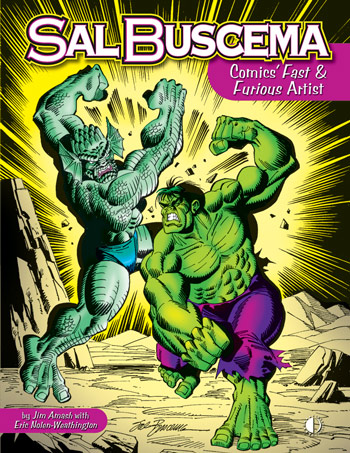
BAB Firsts - BAB Book Review: Sal Buscema, Comics' Fast and Furious Artist


This post was originally published on April 2 2010

Doug: Last December Karen and I showed some things on our Christmas wish lists. On March 19 I finally got one of my wants -- TwoMorrows' Sal Buscema: Comics' Fast and Furious Artist, by Jim Amash with Eric Nolen-Weathington. I received the standard trade paperback edition, which retails for $26.95. You can order it here (at a slightly discounted price). It was worth all of the publishing delays...

As I usually do with TwoMorrows' books and magazines, I took a quick thumb-through upon unpacking it. I'm not sure they could have crammed any more art into this volume! If you wanted samples of Sal's work, then you'll get it here (Disclaimer -- the illustrations I've included with this post are examples of original artwork that was for sale on eBay when I wrote this post; these art pages are not in the TwoMorrows book). In fact, the last 64 pages are a B&W and color art gallery featuring sketches, commissions, and tons of published covers and art pages. All of that is in addition to literally hundreds of exhibits from Sal's career shown throughout the book. The format of the text is one long interview between Jim Amash (best known as one of the major contributors to Roy Thomas' Alter Ego magazine) and Sal. To say it's an exhaustive interview might be an understatement. Amash covers all of the points of not only Sal's career, but his life. I had the one-time pleasure of visiting all-too-briefly with Sal at the Chicago Comicon (in the late 1990's), and his gentlemanly manner certainly shines through in Amash's interview.

Fans of Sal's big brother John (eight years Sal's senior) will be extremely excited to read all of the anecdotes about John's career, as well as the interaction between the two. I at first wondered at the directness of interviewer Amash's questions in regard to John -- in a book about Sal, it seemed as if Amash jumped right in about the impact of John's career on the family, on Sal, about the two being compared, etc. Sal's love for his brother just shone through, and any discomfort I had was quickly laid to rest. In a market that is all too thin on the life and work of John Buscema, this biography of Sal dovetails nicely with Vanguard's The John Buscema Sketchbook, Pearl Press's John Buscema: A Life in Sketches, and the out-of-print SQ Productions The Art of John Buscema. Whereas the first and last books feature interviews with John, this latest Buscema book features comments from Sal himself on John's career. Of particular note is Sal's clearing up once and for all the matter of John hating comics. Sal affirms that John didn't hate comics; John hated drawing buildings! John wanted to draw people, and particularly loved drawing Conan and Tarzan because there were no rules -- the fantasy settings allowed John's imagination to run wild and he could draw whatever he wanted!


One of the most interesting series of quotes in this book concerns Sal's remarks about inkers who have embellished his work over the course of his career. While he admits that he holds no one in disdain and would never deny a man his livlihood, he does have negative words for Mike Esposito, Joe Staton, and Ernie Chan.
He says that although he liked Joe Sinnott inking over his pencils, John strongly disliked Sinnott's inks -- not Sinnott the man, but the impact Sinnott had on John's pencils. Sal remarks that while Sinnott is certainly considered one of the best inkers in the business, when Joe inks a penciller, it's Joe you see. I'd argue that Sinnott is what gave the Fantastic Four its visual identity over 2+ decades, but I understand what is being said. Oh, one other nugget -- Sal reveals that John loved Dan Adkins inks on the Silver Surfer. What the...?! I have many a'time commented that I think Adkins was even heavier than Sinnott over Big John. I was shocked to read this!

Sal also discusses his collaborators through the years. Of all of the writers he has worked with, he praises Len Wein and Steve Englehart above all others. Wein was his longtime scribe on The Incredible Hulk (I did not realize that Sal handled the art chores on that title longer than Herb Trimpe), and Sal raves how they just clicked -- Sal knew exactly what Len wanted him to draw, and Len often couldn't believe how Sal returned pages with ideas drawn just as he'd envisioned them. Sal gives the reader further insight to the oft-discussed "Marvel method", and takes a shot at current writers and their too-constricting plot synopses. In Sal's opinion, artists of today are confined. As for Englehart, Sal places him just below Wein, yet raves about their tenure on Captain America. Sal does hold some reservation, though, for the climax of the Secret Empire storyline, and further questions Steve Rogers becoming Nomad. To Sal, Rogers and Captain America cannot exist apart. Sal also discusses his relationship with Jim Shooter. At first amicable, they parted under less-than-friendly circumstances due to Shooter's alleged micro-managing of Sal's art on Amazing Spider-Man Annual #21: the wedding issue. This was detailed in Back Issue #23
. It's those little stories that make this book a really fun, nostalgiac, insightful, and so much more-kind of read.

The table of contents is --

Introduction by Walter Simonson

1. Inspiration All Around
2. A Heroic Departure
3. How to Break In the Marvel Way
4. The Workhorse Hits His Stride
5. A New Start With a Different Company
6. The Craft of Creating Comic Book Art


Art Gallery
(pssst... an Index would have been a nice addition!)


You can find a chronological listing of Sal's work by clicking here.

Monday, December 1, 2014

Arc of Triumph? Amazing Spider-Man 176-180


Doug: Here's a little run of comics that I actually just sold about three weeks ago. What recollections do you have of this 5-parter? I recall it being very exciting, and especially liking the redemption of Harry Osborn. The Ross Andru art was just very steady throughout the 1970s, and this arc was no exception. I'd have to read this again, but overall I have fond memories.


Monday, November 17, 2014

Arc of Triumph? Defenders 22-25


Doug: My Defenders buying was hit/miss around these issues. I was definitely consistent by the time the Guardians of the Galaxy arc hit a few issues later. My main memories of the Sons of the Serpent come from reading the Marvel Triple Action reprints of the Avengers in the Kooky Quartet (plus Goliath and the Wasp) era. But what of these four issues? Who has recollection?


Related Posts with Thumbnails